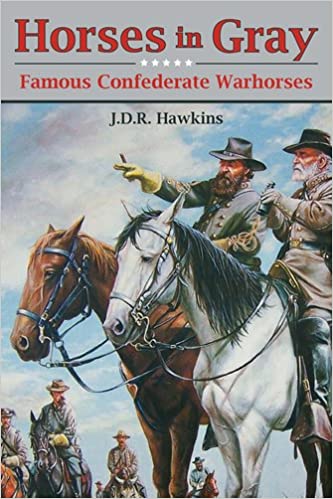
I don’t write about my nonfiction book as much as I should, so you probably don’t know too much about it. Several years ago, I was inspired to write about the horses that were involved in the War Between the States, and chose to specifically discuss those that served for the Confederacy. The book has been published by Arcadia Publishing (Pelican) and is available in several Civil War battlefield giftshops, including Gettysburg.
Last week, I discovered that the book received two five-star reviews, so I thought I would share them with you. Thank you so much, Emily Anne and Antoine M., for your awesome reviews!
This book offers an impressive and thorough exploration of Confederate military horses during the Civil War. Robert E. Lee’s Traveller, Stonewall Jackson’s Little Sorrel, and many others are profiled in detail, giving readers insight not only into their roles in battle but also into their lives, care, and lineages.
The author does an excellent job explaining why certain breeds and colors were preferred for specific tasks, how horses were acquired, and the factors contributing to their survival or death in wartime conditions. The inclusion of personal stories behind the horses’ names and their lasting legacy adds depth and humanity to the narrative.
What sets this work apart is its combination of meticulous research and engaging storytelling. It provides both historical context and vivid detail, making the horses’ experiences tangible and memorable. This is a must-read for Civil War enthusiasts, military historians, and anyone interested in the often-overlooked role of animals in history.
This book truly changed the way I view the Civil War. I had never considered the immense suffering endured by military horses. The sections explaining why certain breeds were chosen and why so many horses died from disease, exhaustion, or injury were heartbreaking but important. The story of Thomas J. and Little Sorrel stayed with me long after I finished reading. Hawkins does an excellent job honoring these animals while grounding the narrative in solid historical research.

 J.D.R. Hawkins
Leave a comment