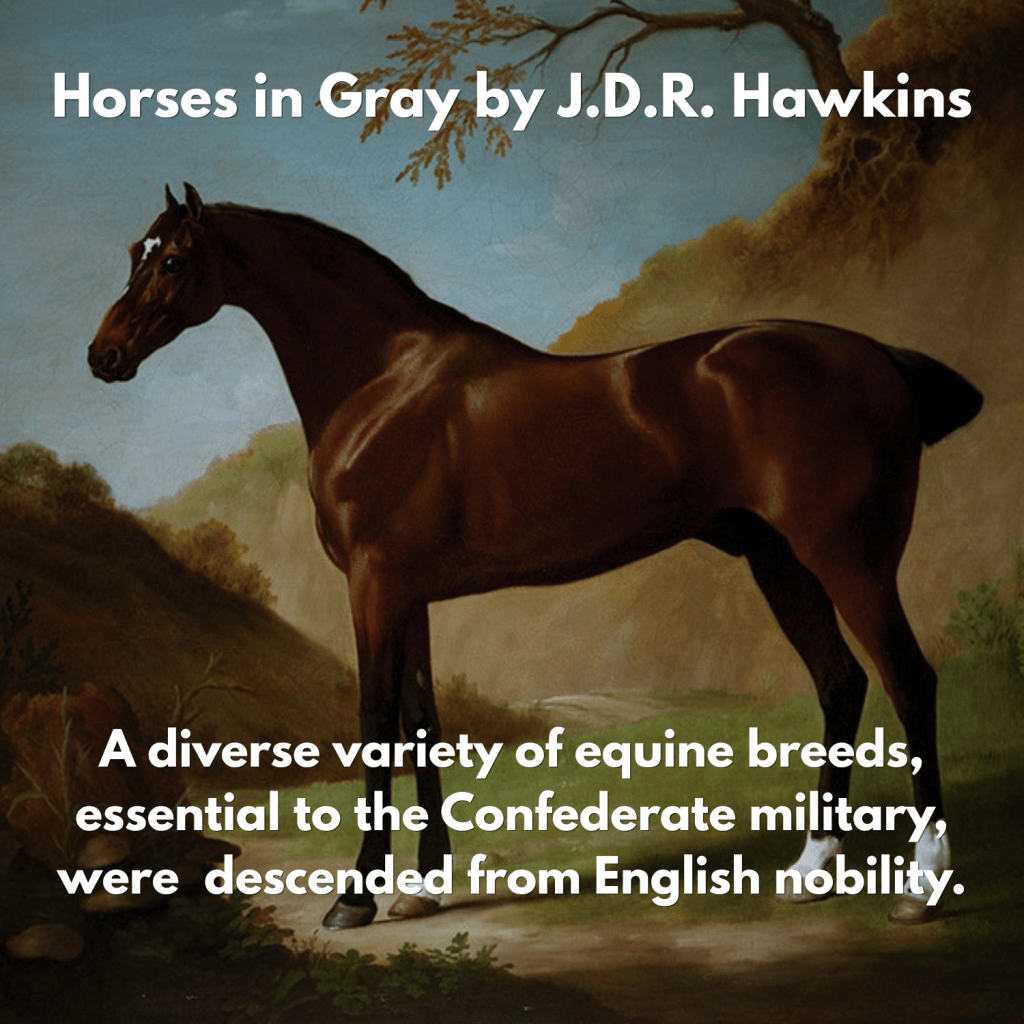
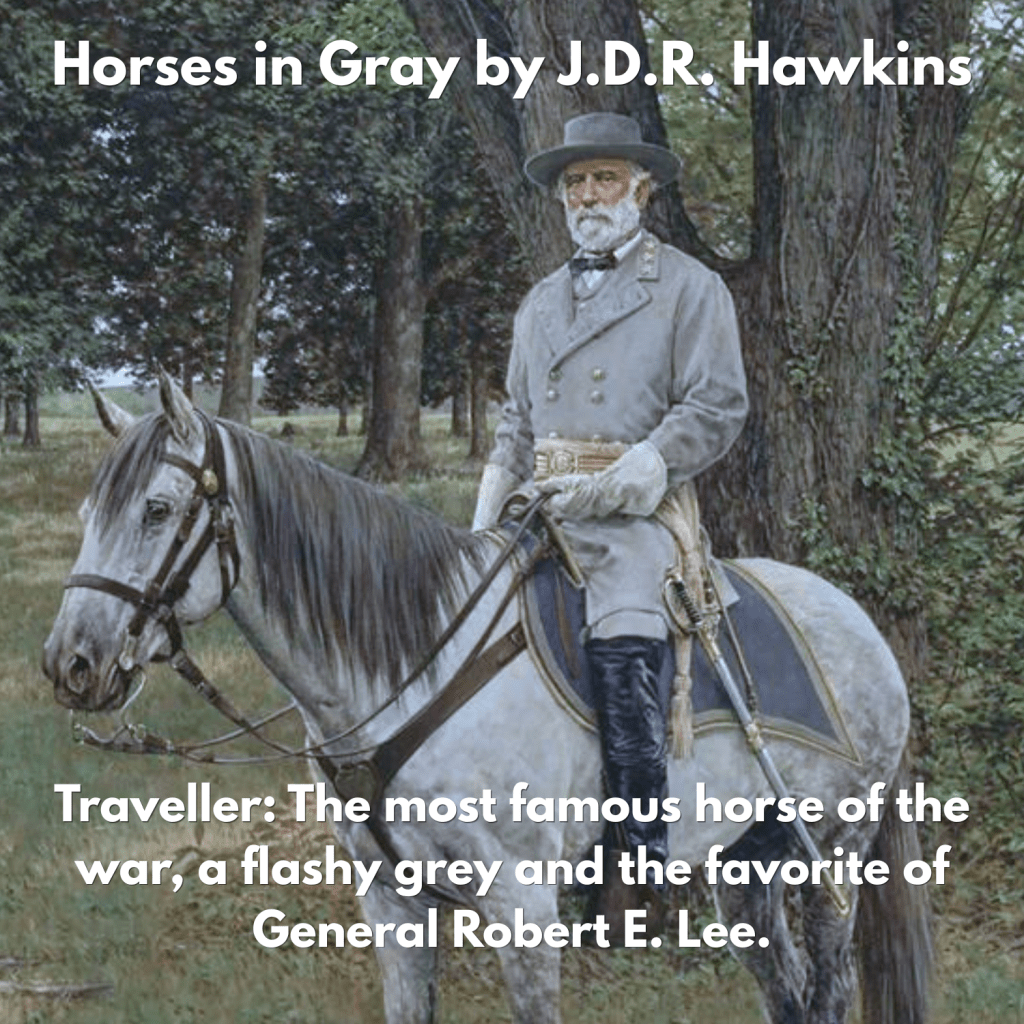
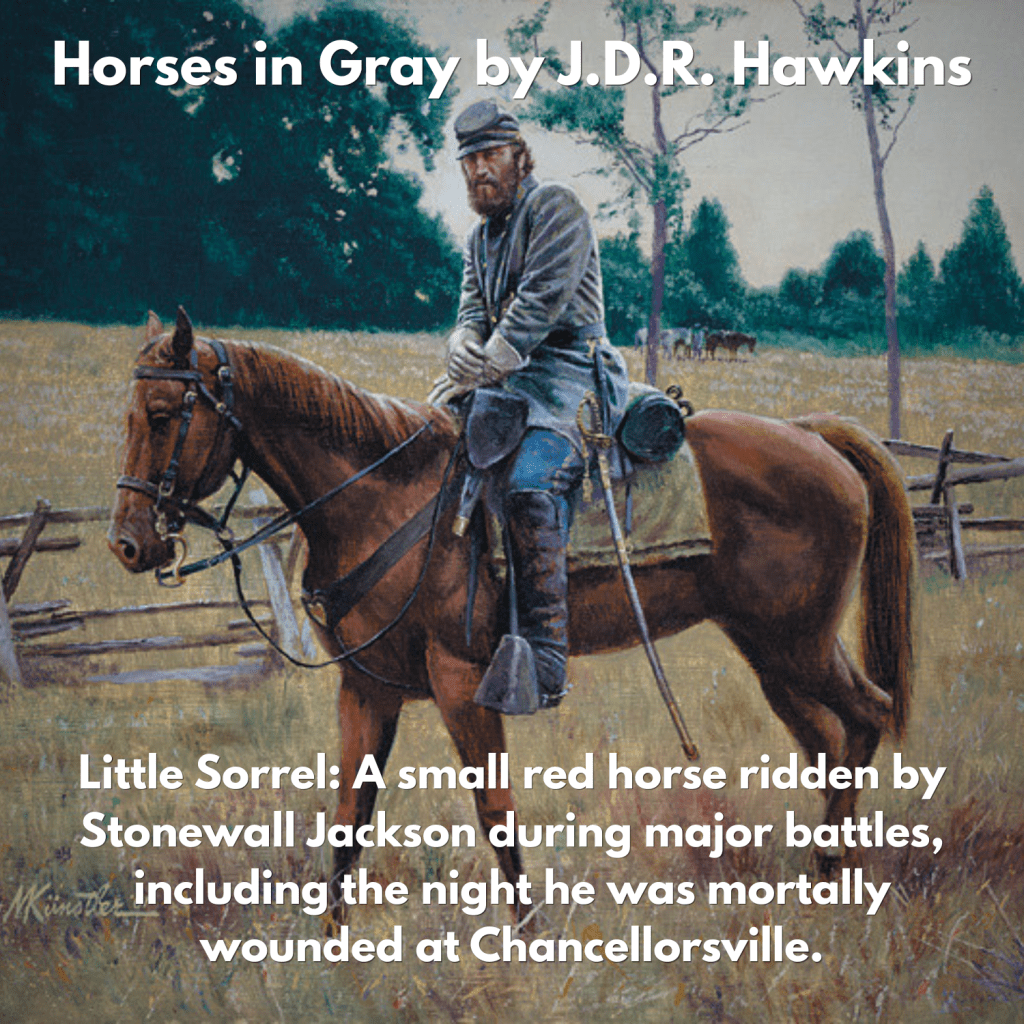
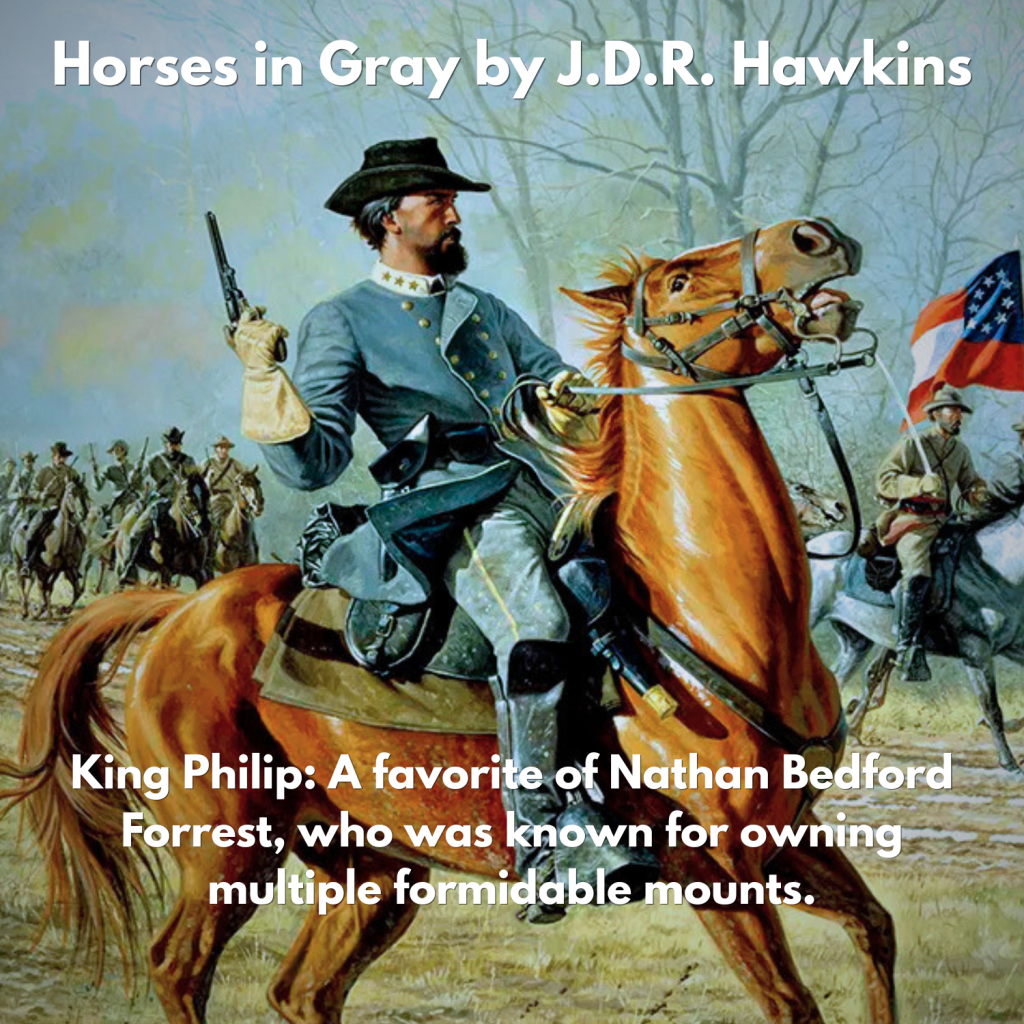
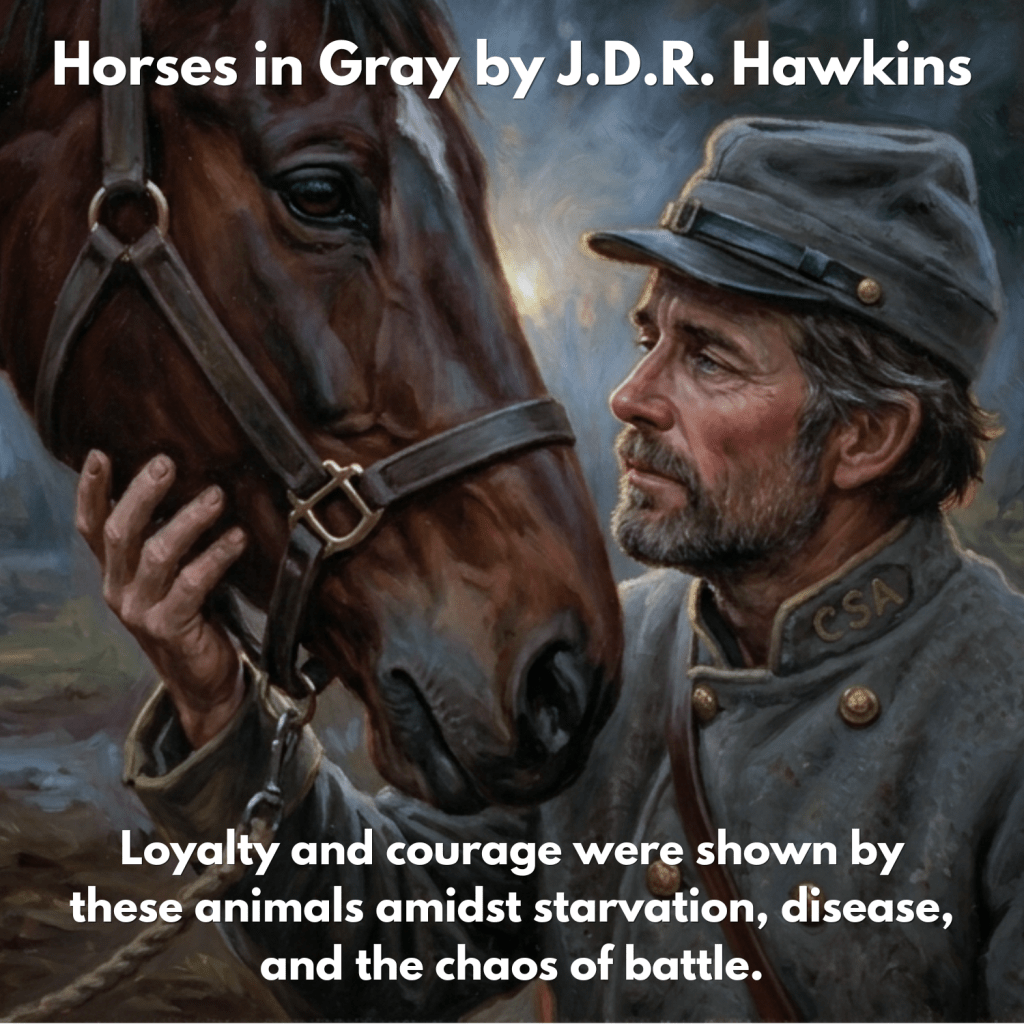
Over the weekend, I recruited my son to help me design some new book teasers for my nonfiction book, Horses in Gray. He is an amazing talent and has helped me create book teasers for nearly all of my books, as well as book trailers for Horses in Gray, A Becharmed Callie Christmas, A Beautiful Glittering Lie, and A Beckoning Hellfire (which I will share with you next week). Here are the teasers we came up with. Please let me know what you think! And don’t forget to share! (Thanks again, Jesse Hawkins!)
I’m very excited to announce that my nonfiction book, Horses in Gray: Famous Confederate Warhorses, now has its own book trailer! I am so fortunate to have such talented family members who are willing to help me with the design, editing, and promotion of my books! Here is another trailer that my son, Jesse, created for me. He also did the book trailers for A Beautiful Glittering Lie:
Please check it out and let me know what you think! Thanks again, Jess, for all your help!
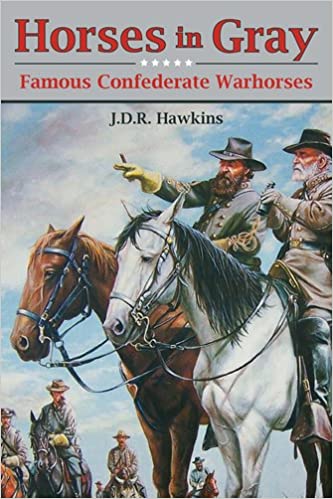
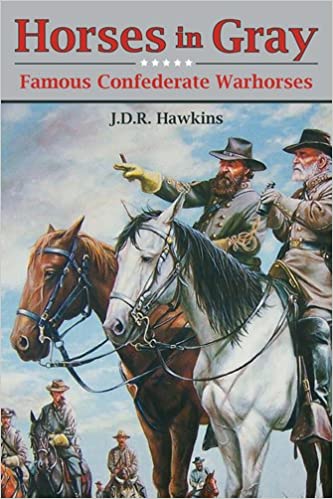
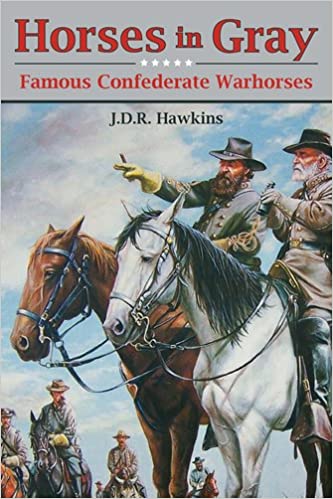
Horses in Gray tells the story of several famous as well as not so famous horses that served under the Confederacy during the Civil War. These include, Traveller, Little Sorrel, Black Bess, Virginia, and King Philip, to name a few. Never before has there been such a comprehensive look at Confederate military horses in the Civil War and their lives before, during, and after battle.
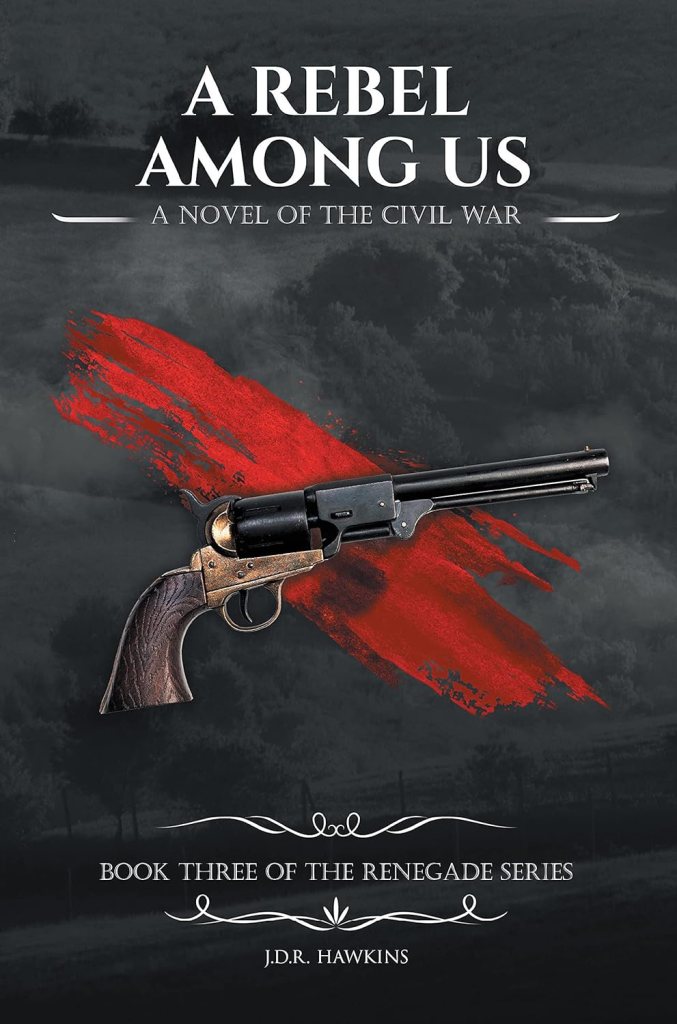
I’ll have to be honest: I really do need to check on Goodreads more often. After looking at the website today, I saw that there are several new five-star reviews for one of my novels, A Rebel Among Us. This is the third book in the Renegade Series, which tells the story of several families whose lives become entwined during the American Civil War. I am so flattered by the reviews that I want to share some of them with you. Thank so much, Aurora, Lucas, Linda, David, and Anne, for your raving five-star reviews!
I went into A Rebel Among Us expecting another war-heavy historical novel, but what caught me off guard was the tenderness. The opening scene in the barn, where Anna discovers David bleeding out after Gettysburg, pulled me in instantly. It didn’t feel rushed or over dramatized it felt painfully real, like stumbling upon a stranger on the edge of death and being forced to decide between duty and compassion. What I loved most was the slow burn. The author doesn’t push romance on us; instead, we earn it through quiet moments mending wounds, shared fears, social tension, and that feeling of forbidden affection growing under impossible circumstances. The moral struggle Anna faces protecting an enemy soldier under her roof was so human. If you like historical fiction with depth, romance with restraint, and characters that feel painfully real, this is the book.
I’m picky about Civil War fiction because so many novels either romanticize the era or distort history. This one does neither. The detail from dialect to battlefield aftermath, to the tension between North and South at the domestic level is incredibly grounded. David’s identity as a Confederate soldier isn’t washed clean; he grapples with loyalty, ego, trauma, and grief. Anna’s side is portrayed with just as much nuance she’s not some angelic northern heroine, she has doubts, frustrations, pride, and her own moral conflicts. This book respects the time period while still delivering a compelling personal story. It felt researched, not imagined.
What impressed me most was how the book never treats the Civil War as a backdrop it treats it as a wound. Every decision David and Anna make is shaped by loss, exhaustion, fear, and loyalty. The book constantly asks: What happens when war stops being patriotic and becomes personal? David isn’t just a soldier; he’s a young man forced to grow up too fast. Anna isn’t just a caretaker; she’s someone holding together a family in a world falling apart. Their connection felt raw and unpolished in the best way. This book hurt in the way good historical fiction should.
What struck me most about this book wasn’t just the dramatic moments it was the quiet ones. The scenes where no one speaks, where Anna watches David sleep, or where he looks out across unfamiliar northern farmland wondering who he is now… those stayed with me. The author understands that history doesn’t just happen in battles it happens in pauses, hesitations, and stolen glances. This book captures that beautifully.
I grew up thinking of the Civil War in terms of battles and presidents. This story shifted my perspective completely. I never thought about what it was like for families who were far from the frontlines but still living with the war at their doorstep. The book highlights how ordinary women held households together while dealing with grief, fear, and moral choices. It felt personal and eye-opening. I learned as much as I felt.
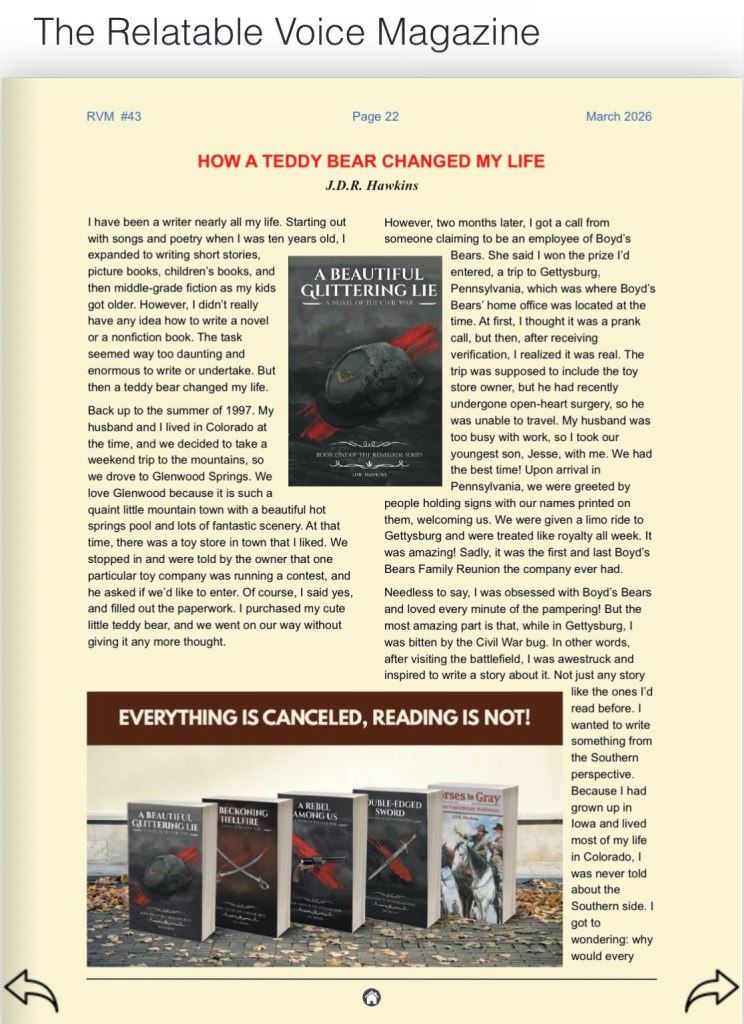
This month, I am one of the featured authors in The Relatable Voice Magazine. My story is a unique one, and I hope you will get a chance to read the article and tell me what you think! My story is on pages 22 and 23. Here is the link:
I was also featured on their podcast! You can listen to the interview here:
I had a lot of fun in the interview! It was a wonderful opportunity for me to discuss my books, as well as my writing process. Thank you again, Lucia and Relatable Voice, for featuring me this month!
I don’t write about my nonfiction book as much as I should, so you probably don’t know too much about it. Several years ago, I was inspired to write about the horses that were involved in the War Between the States, and chose to specifically discuss those that served for the Confederacy. The book has been published by Arcadia Publishing (Pelican) and is available in several Civil War battlefield giftshops, including Gettysburg.
Last week, I discovered that the book received two five-star reviews, so I thought I would share them with you. Thank you so much, Emily Anne and Antoine M., for your awesome reviews!
This book offers an impressive and thorough exploration of Confederate military horses during the Civil War. Robert E. Lee’s Traveller, Stonewall Jackson’s Little Sorrel, and many others are profiled in detail, giving readers insight not only into their roles in battle but also into their lives, care, and lineages.
The author does an excellent job explaining why certain breeds and colors were preferred for specific tasks, how horses were acquired, and the factors contributing to their survival or death in wartime conditions. The inclusion of personal stories behind the horses’ names and their lasting legacy adds depth and humanity to the narrative.
What sets this work apart is its combination of meticulous research and engaging storytelling. It provides both historical context and vivid detail, making the horses’ experiences tangible and memorable. This is a must-read for Civil War enthusiasts, military historians, and anyone interested in the often-overlooked role of animals in history.
This book truly changed the way I view the Civil War. I had never considered the immense suffering endured by military horses. The sections explaining why certain breeds were chosen and why so many horses died from disease, exhaustion, or injury were heartbreaking but important. The story of Thomas J. and Little Sorrel stayed with me long after I finished reading. Hawkins does an excellent job honoring these animals while grounding the narrative in solid historical research.
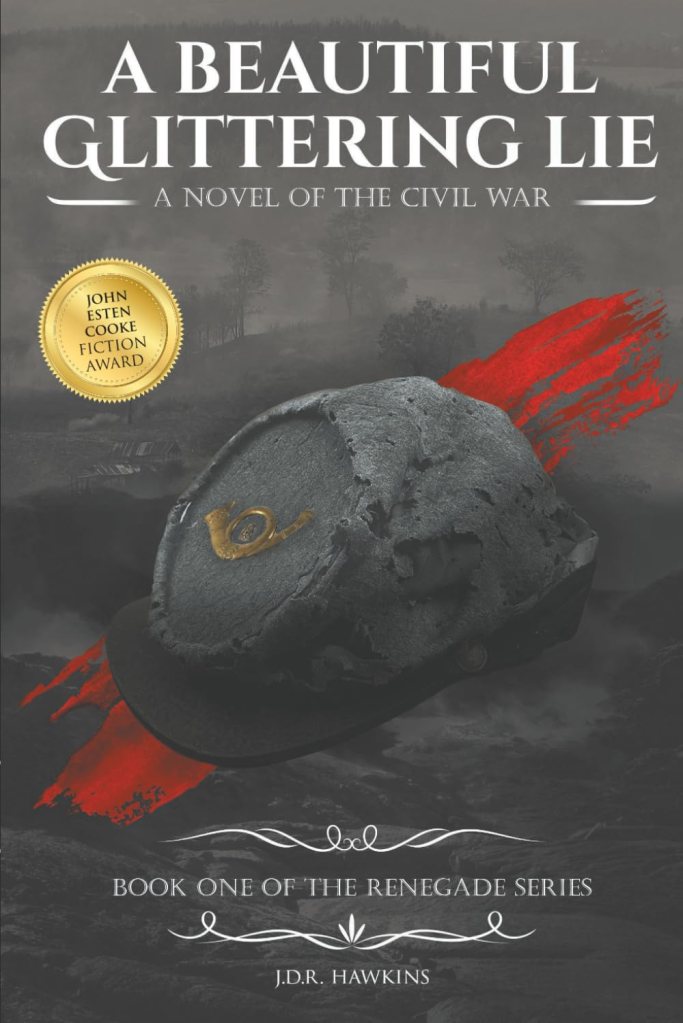
My novel, A Beautiful Glittering Lie, has a brand new book trailer! This features the first book in the Renegade Series, which tells the story of a family from north Alabama and how the Civil War impacts them. Let me know what you think! And please like my page on YouTube! Thank you so much!
Today I am being highlighted on Bizz Buzz. This is a very special honor, and I am humbled to be featured on such a prestigious website. Here is the article. Once again, thank you so much for being part of my writing journey!
The Enduring Narrative of the American Civil War: Historical Fiction Through a Southern Lens.
An in-depth look at the Renegade Series and how award-winning author J.D.R. Hawkins brings authenticity, moral complexity, and historical depth to Civil War fiction.
The American historical fiction literature is greatly enriched with the Civil War stories, which remain to be interesting and challenging the reader with their complicated moral, political and personal dilemmas. One of the most popular subgenres is the exploration of the conflict by the experiences of the front line and the home front. These novels tend to be crucial channels through which the human cost and the divergent ideologies that determined the most defining internal conflict in the nation can be comprehended. One of these niches in this genre is depicting the war as seen by the Confederate side.
This perspective, which female writers discuss less, has its own difficulties in historical study, characterization and narration, and requires a high level of sensitivity and attention to detail, in order to be able to capture the socio-political atmosphere of the middle of the 19th century.
The ability to combine an enormous amount of historical detail with the ability to tell the story through characters is the hallmark of the authors who are able to bring this turbulent period to life and provide the contemporary readers with a detailed and vivid insight into the crucial moment of American history.
The literary works that are critically and commercially successful in this genre are those that have been acclaimed by historical societies and literary institutions due to their observance of authenticity and other awards that are founded on their richness and breadth.
J.D.R. Hawkins: Chronicling the Confederate Experience in theRenegade Series
J.D.R. Hawkins was born on June 9, 1959 in the United States of America and she is a renowned American author that has well established herself in historical fiction, especially in her famous series known as the Renegade Series. It is the epic effort of novels devoted to the description of the cruel and even painful life of a Confederate soldier and his family during the Civil War and the first post-war period in the USA.
Hawkins is a unique female writer in the literary world because few other female writers have dealt with the narrative of the Civil War specifically with the Confederate or Southern perspective. She is devoted to this view, and her writing is marked by an in-depth study of history that gives her character plots a certain air of deep authenticity.
The story of Hawkins in the world of writing started in her early years when her parents supported her artistic interests and provided her with a solid education. Hawkins was born in Sioux City, Iowa and studied her academic interests by receiving a Bachelor of Science degree in journalism at the Iowa State University. This journalistic rigor was probably the cause of the attention to detail and careful research that would characterize her subsequent historical fiction. Hawkins began her career in writing short stories, articles, and even children books before she finally settled on her main subject, the complicated period of the Civil War, by writing her first full-length novels.
The literary heritage of the author is centered on the so-called Renegade Series, which is an impressive, panoramic depiction of the lives of people involved in the war. The story is the journey of a Confederate cavalryman and his family over the years of fierce battles and social turmoil, their emotional and physical survival.
Deep Dive into the Renegade Series
The show consists of four major seasons, each of which has received considerable critical and commercial recognition:
A Beautiful Glittering Lie: A Novel of the Civil War
This novel was written in 2021 and is a good start to the series. Early critical acclaim saw Hawkins win the 2013 John Esten Cooke Fiction Award and the 2012 B.R.A.G. Medallion, as well as its historical fact and its effective story. Even the very name of the novel suggests the grimness behind the romance or ideology of war, which predetermines the cold-blooded look at the war in the series.
A Beckoning Hellfire: A Novel of the Civil War
The second sequel, also released in 2021, picks up the story, delving into the emotional and physical price paid by the war. The novel also solidified Hawkins as an author of good historical fiction, as it is considered to be an award-winning sequel and even won the 2022 B.R.A.G. Medallion. The title brings out the merciless and devastating Civil War battles that the characters are involved in.
A Rebel Among Us: A Novel of the Civil War
Published in 2021, this book continues to be of high standards as its predecessors. It won the 2017 John Esten Cooke Fiction Award and also won the 2022 B.R.A.G. Medallion, which underscores the uniformity of literary quality of the series. The story is centered on the mounting internal and external stress of people who were loyal to the confederate cause.
Double-Edged Sword: A Novel of Reconstruction
The latest volume in the series, which was published in 2022, continues the story past the end of the war to the confusing and turbulent era of Reconstruction. Entering this critical period of the postwar, Hawkins gives a full account of the long-term effects of the war on both the soldier and his family. The novel has been well-known, having won the 2022 B.R.A.G. Medallion and the 2023 John Esten Cooke Fiction Award, proving the quality and longevity of the work of the author.
Broader Literary Contributions and Acclaim
Hawkins has also made a contribution to the historical record in her nonfiction book, Horses in Gray: Famous Confederate Warhorses. This is a specialized writing that examines the important and in most cases unnoticed contributions made by horses in the Civil War that describe the importance of horses in war and military activities. She has also written a short story, A Becharmed Callie Christmas, which is a festive, character-oriented interlude relating to the larger world of the Renegade Series.
Hawkins is as commercially successful as she is critically acclaimed. She has been acclaimed as a bestseller by the significant sites, such as Amazon, USA Today, and the Wall Street Journal, and this fact demonstrates her wide popularity among a wide audience. She has managed to strike the right balance between historical precision and her narrative style, which has been well-received by critics and the audience.
Professional Affiliations and Personal Background
Hawkins has a close affiliation with the historical and literary circles. She has also been a part of different elite societies like the United Daughters of the Confederacy which can be attributed to be her dedication to the history and heritage of the Southern experience. Her literary associations include The International Women Writing Guild, Rocky Mountain Fiction Writers, and Pikes Peak Writers, another thing that proves her interest in the art and support of other writers. She also belongs to the Historical Novel Society and this only serves to solidify her credentials in the genre.
Hawkins also lives a rich life outside of writing on a personal level. She has a family of her own, including two sons whom she has brought up together with her husband in the course of their 40 years of marriage and has a daughter-in-law and two grandsons. Her artistic talents are not limited to literature since she is also an artist and a singer/songwriter whose artistic commitment has been evident throughout her life. The work of J.D.R. Hawkins and especially the extensively researched and much-acclaimed Renegade Series is a major contribution to the genre of historical fiction, that is, telling the complex and humanized story of the American Civil War and the Reconstruction era as it happened through the lens of a Confederate family.
Last week I received an awesome email from a fan regarding my novel, A Beckoning Hellfire. The book is the second one in the Renegade Series, and tells the story of a young man from Alabama who enlists with the Confederate cavalry during the War Between the States. I was so flattered that I wanted to share it with you. Thank you so much, Sunday Smith, for your email!
Deep appreciation for A Beckoning Hellfire
Dear J.D.R. Hawkins,
I wanted to take a moment to tell you how much A Beckoning Hellfire moved me. From the very beginning, David’s journey from grief to vengeance and into the brutal reality of war gripped me in a way that few books do. You captured not only the history of the Civil War but also the fragile heart of a young man caught in its storm.
What struck me most was how you showed the human cost of war in such a vivid and unflinching way. The pain, the battles, and the disillusionment felt so real, but beneath it all was also a quiet reminder of resilience and the strength it takes to keep moving forward when everything seems lost. Reading David’s story reminded me that behind every conflict are human lives, broken dreams, and the hope that somehow peace can be found again.
Your writing is more than historical fiction. It is a mirror to our humanity, a reminder of the scars of the past, and a warning of what we risk if we forget. Thank you for crafting a story that resonates so deeply and lingers long after the last page.
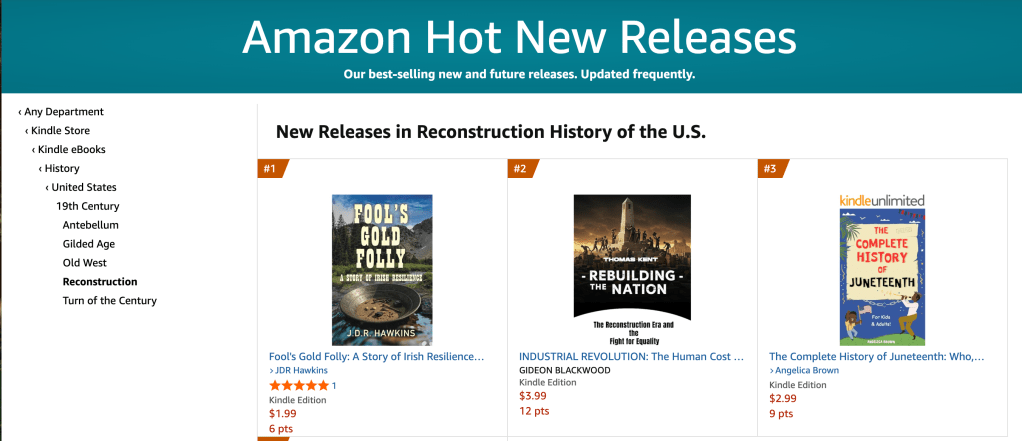
I’m thrilled to announce that my latest book, Fool’s Gold Folly: A Story of Irish Resilience, has reached #1 on Amazon’s Hot New Releases in Reconstruction History of the U.S.!
And now, it’s available as an audiobook! Experience Patrick Mulligan’s gripping adventure in the rugged terrains of the Colorado Territory, brought vividly to life by professional narration.
My holiday-themed historical novel, A Becharmed Callie Christmas, is now available in audiobook format as well! Cozy up and immerse yourself in this heartwarming Civil War-era Christmas story.
Mr. Davis was very fond of animals and birds. He always gathered the scraps from the breakfast table to feed his peafowls, and his dressing gown pockets were heavy with grain for his beautiful pets. He had a large flock of peafowls, of which he was very proud and fond. Every morning Mr. Davis would take his exercise on a short pavement leading from the back steps at Beauvoir.
“It is just the length of my exercise path in prison,” he would tell his friends.
Up and down, up and down this pavement he would walk, at his heels and all around him his flock of peafowls. One old cock especially would spread his gorgeous tail, droop his wings, and strut after Mr. Davis in the most comical fashion. Evidently, the bond of friendship between the two was a close one.
Fond as Mr. Davis was of his peafowls, his especial pet was his dog, Traveler, the same name as Robert E. Lee’s famous horse. This dog had a very wonderful history. Mr. (Samuel W.) Dorsey, husband of Mrs. Sarah Dorsey, from whom Mr. Davis purchased Beauvoir, had traveled all over the world. On the Bernise Alps, Mr. and Mrs. Dorsey purchased the young puppy, whose father was a Russian bulldog. The puppy was named Traveler. They carried the young dog everywhere with them, and he was trained to be Mrs. Dorsey’s bodyguard.
Once, while camping on the Arabian Desert, Mr. Dorsey had one of his Arabian servants punished severely for theft. The next day, Mr. Dorsey and some of the Arabians went on a two days’ journey, leaving Mrs. Dorsey and the camp in the charge of an old Arab sheik. That night, while asleep under the tent, Mrs. Dorsey was awakened by a spring and growl from Traveler, then the shriek of a man. She sprang from her cot, quickly got a light, and found the Arab who had been beaten by Mr. Dorsey’s orders pinned down to the ground by Traveler, a huge knife lying beside him, where it had fallen from his hand. He had cut his way into the tent and crept in, evidently determined to wreak his vengeance upon her for the stripes he received.
Mrs. Dorsey had magnificent diamonds, which she wore at night to a reception at the Tulleries. On her return to the hotel, she went at once to her room, while her husband and some friends walked out to smoke. She quickly went to sleep, but was aroused by a sound of a desperate struggle on the floor, where Traveler had succeeded in throwing the thief who had followed her, attracted by the glitter of her diamonds. This man was one of the worst characters in Paris, and the gallows were cheated when he died of the wound in his throat torn by Traveler’s teeth.
After Mr. Dorsey died, Traveler was given to Mr. Davis and became his constant companion and guard. He allowed no one to come on the place whose good intent he had any reason to suspect. The entire place was under his care; not a window or door was locked or barred, for everything was safe while Traveler kept his sentry march on the wide porches that surrounded the house on every side.
If Mr. Davis wished to safeguard their coming and going of anyone and give him the freedom of the place, day or night, he would put one hand on the person’s shoulder and the other on the dog’s head and say: “Traveler, this is my friend.”
The dog would accept the introduction very gravely, would smell his clothes and hands, and “size him up” generally; but he never forgot, and, henceforth, Mr. Davis’ “friend” was safe to come and go unmolested.
As fierce as the dog was, and as bloody as was his record, he was as gentle as a lamb with little children. Mrs. Davis’ small niece, a child about two years old, make the dog her chosen playmate, and the baby and the dog would roll together on the grass in highest glee. She would pull his hair, pound on his head, or ride around the place on his back, the dog trotting as sedately as a Shetland pony. This child lived some distance down the beach; but she went home day after day in perfect safety, guarded and guided by Traveler.
Traveler would rush around in hot pursuit of fiddler crabs, which was a pet diversion of his, and would bark and throw up the sand with his paws in wild glee when he had succeeded in driving a number of the ungainly objects into the sea. But even fiddler crabs had no attraction for Traveler when he went to walk with Mr. Davis. He was then a bodyguard, pure and simple, and had all the dignity and watchfulness of a squad of soldiers detailed as escorts. Mr. Davis would become buried in thought, almost oblivious to surroundings. Traveler had his own ideas of what was right and proper; so if in absorption Mr. Davis would walk very close to the water Traveler would gently take his trousers leg in his teeth, or, by bounding between him and the sea, he would manage to call attention to the big waves coming in.
One day, Traveler seemed very droopy and in pain. As ordinary measures did not relieve him, Mr. Davis wrote a note to a friend who was the most celebrated physician in that part of the country. The doctor came, but nothing seemed to relieve the dog’s suffering. All night he moaned and cried, looking up into Mr. Davis’s face with big, pathetic eyes, as if begging for help from the hand that had never before failed him. All those long hours, Mrs. Dorsey, Mr. Davis, and the doctor kept their hopeless watch, for the work of the vile poisoner had been too well done for remedy. Just at daylight he died, his head on Mr. Davis’ knee and his master’s tears falling like rain upon the faithful beast.
As Mr. Davis gently laid the dead dog upon the rug, he said softly: “I have indeed lost a friend.”
Traveler was put in a coffin-like box, and all the family were present at the funeral. Mr. Davis softly patted the box with his hand, then turned away before it was lowered into the ground. The dog was buried in the front yard of Beauvoir, and a small stone, beautifully engraved, marked the place, (but at some time during the intervening years, that stone has unfortunately disappeared) By: L. H. L. Excerpted from the Confederate Veteran Vol. XVII, No. 4, April, 1909
Thanks to: Sunny South News, Lowry Rifles Camp #1740 – Rankin County, Mississippi – Bill Hinson, Editor








 Experience Patrick Mulligan’s gripping adventure in the rugged terrains of the Colorado Territory, brought vividly to life by professional narration.
 Listen now on Amazon Audible:
 Also Available!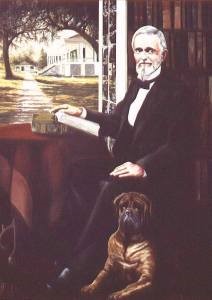
 J.D.R. Hawkins
