This Saturday, I will be participating in the annual Author’s Fair, which will take place in downtown Redding, California. I will be there signing my books, so if you’re in the neighborhood, stop by! All four books in the Renegade Series will be on sale for half price! Don’t miss your chance to get copies of these books. They make great holiday gifts!
In other news, Boulder Bookaholics Book Club featured my new book, Fool’s Gold Folly. Here’s what they had to say:
Event Summary The Boulder Bookaholics Book Club hosted a spotlight session featuring Fool’s Gold Folly. Members discussed major themes, characters, and shared personal takeaways. This spotlight allowed the group to engage with the author’s work in depth.
Engagement Highlights Overall Rating: 25 star Favorite Themes Discussed: Westward Expansion & the American Dream
Member Quotes “We really enjoyed Fool’s Gold Folly! The story felt real and heartfelt, and we loved how J.D.R. Hawkins brought the Irish immigrant experience to life.” “At Boulder Bookaholics, a member said Fool’s Gold Folly highlights immigrant hope and struggle, with friendship providing strength in hard times.”
Thank You On behalf of the Boulder Bookaholics Book Club, we thank you for creating such a wonderful book. It was an honor to spotlight your work and share it among our community of readers.
I also received this flattering email from a fan:
Hi JDR,
I came across Fool’s Gold Folly and felt I needed to tell you how deeply it moved me. As someone who spends much of my life surrounded by books, I know how rare it is to find a story that speaks not only to the mind but also to the heart. Yours did both in such a powerful way.
Patrick Mulligan’s journey is more than just a search for gold. It is the story of resilience, of carrying hope in times of uncertainty, and of what it means to build a life in the face of both promise and peril. Through him, you give voice to the courage of so many who dared to dream of a better future, and that left me both humbled and inspired.
What touched me most was the way you brought Silas Garvey to life. He was more than a character. He was a reminder that even in illness and hardship, there is still meaning, friendship, and humanity. His presence gave the story a tenderness that lingers long after the final page.
Thank you for creating a book that is not only rich with history but also rich with heart. It is the kind of work that inspires readers to keep going, to believe in their own strength, and to see the beauty in the bonds we form along the way.
With admiration and respect, Mary
Thank you, Mary, for your email! And I want to thank you again for your ongoing support. If you haven’t done so yet, please check out my website. There, you will find links to follow me on all my social media pages. https://jdrhawkins.com
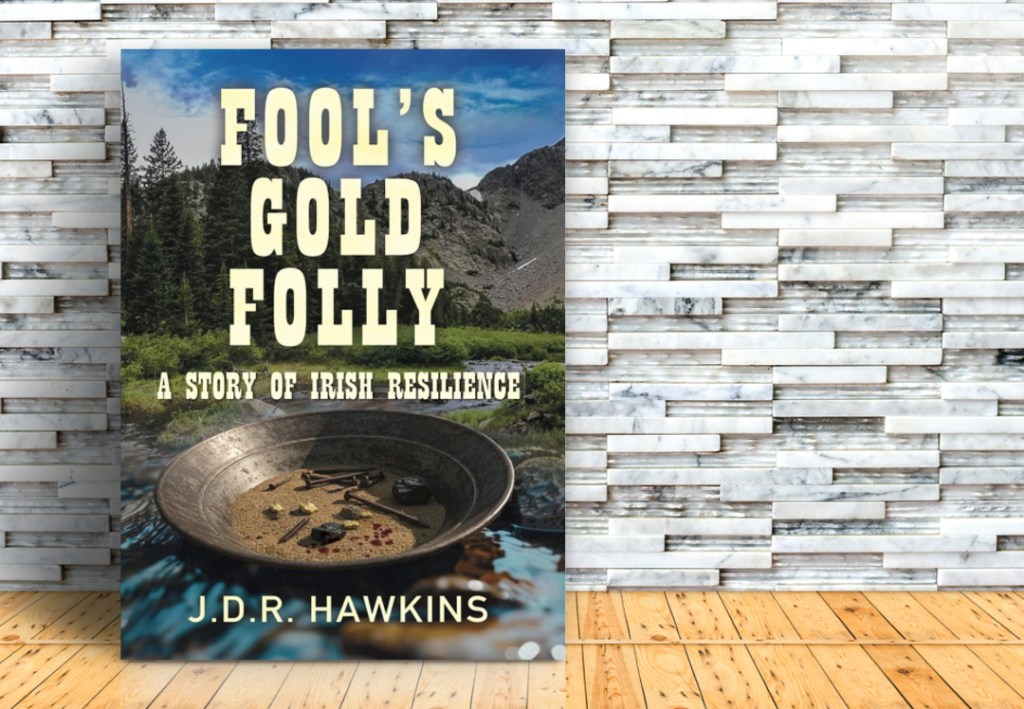
I would like to share upcoming news regarding my newest book, Fool’s Gold Folly. This novella ties in with the Renegade Series, and tells the story of one of the minor characters, Patrick Mulligan, who first shows up in book three of the series, titled A Rebel Among Us. Once the Civil War has ended, Patrick uproots his family from Pennsylvania and takes them to Colorado territory where he hopes to strike it rich. However, he encounters more than he anticipated when he meets an old miner, Silas Garvey. This book is being featured in several online book clubs, and is garnering many more five-star reviews on Goodreads. Here area few:
Fool’s Gold Folly” is the kind of story that lingers in your heart. The way Irish resilience is woven into the narrative made me feel both proud and inspired. A remarkable read that balances grit with hope.
Fool’s Gold Folly” is a moving tribute to the Irish people’s unshakable resilience. The author captures hardship without ever losing sight of hope, which makes this book not only historical but deeply human. I closed it with tears in my eyes and admiration in my heart.
This book surprised me. I expected a typical historical drama, but what I found was a layered story of loss, resilience, and survival. The way the characters wrestle with dreams versus reality felt so authentic, and it gave me a new appreciation for Irish history and endurance.
The title hooked me, but the story kept me. There’s a beautiful tension between despair and hope, woven into every chapter. By the end, I felt like I had lived through the struggles myself, a testament to the author’s storytelling.
Reading this book was like stepping into another era. The hardships felt real, the victories hard-earned. What impressed me most was how universal the themes are, resilience, courage, and the pursuit of something better. It’s Irish at heart, but relatable to all.
Fool’s Gold Folly” blends sorrow and strength in equal measure. It’s the kind of book that forces you to pause, reflect, and appreciate how far human endurance can go. The characters carry both flaws and bravery, which makes them unforgettable.
In other news, I will be participating at a local author event here in Redding, California. If you’re around, stop by! I will be offering the four major books of the Renegade Series for half price.
As always, I’d like to invite you to check out my website, jdrhawkins.com, and sign up for my newsletter. There you will find more information about upcoming events, interviews, blog posts, book signings, etc.
I’ve listed all of my links below. Please like, follow, and share! Again, thank you so much for your ongoing support!
I recently received more five-star reviews for my latest book, Fool’s Gold Folly. This novella goes along with the Renegade Series and tells the story of one of the minor characters, Patrick Mulligan. Thank you so much, Mac Dougherty, Rebekah Acosta, and Elyse Huber, for your amazing reviews!
Reading this book felt like watching a movie unfold. The wagon jerking down a mountain road, the snowy passes glinting under starlight, Briana nervously scrubbing dishes in Mrs. Tydings’ immaculate parlor it all played out like a film in my head. Hawkins has a way of writing cinematically without losing emotional intimacy. I could see the dust rising from wagon wheels, hear the laughter around the fire, and feel the humiliation when Patrick was dismissed in town. The saloon scenes in particular stood out, filled with light, smoke, and the soft rasp of Silas Garvey’s cough. I would love nothing more than to see this story adapted to the screen, because it already reads like it’s halfway there. The landscapes and the humanity are written with stunning clarity.
The opera chapter is one of the finest pieces of writing I’ve come across in historical fiction. Patrick and Briana entered with joy, dressed simply but proud, only to be shoved aside with the phrase “seats for your kind.” I felt his humiliation so strongly it was like a physical ache. And yet, once the music began, they were swept into awe like everyone else. That contrast prejudice and beauty colliding in the same moment is what makes this novel unforgettable. Hawkins didn’t need explosions or dramatic duels to keep my attention; she used something far more powerful: the sting of words. The description of the stage, the costumes, and the soaring voices was so vivid I could see it all. This scene alone could stand as a short story about hope, art, and resilience. It’s rare to find a book that makes you both angry and uplifted in the same breath.
Silas Garvey walked into the story quietly, coughing into his glass at the saloon, but he left an enormous mark on me. His conversations with Patrick were raw and full of wisdom. Silas wasn’t just a side character he was a mirror of mortality, a reminder that dreams can fade but dignity remains. Every time he appeared, I slowed down to savor his words. His presence transformed Patrick’s journey from being only about chasing gold to being about friendship and meaning. Hawkins could have easily written him as a background figure, but instead, she gave him a soul. Watching Silas struggle with his health, yet still find time to encourage Patrick, was both inspiring and heartbreaking. By the time his arc drew to a close, I felt like I had lost a friend. That kind of emotional connection is rare and powerful.
I recently received two new five-star reviews for my latest book, Fool’s Gold Folly on Amazon. This book ties into the Renegade Series, and tells the story of one of the minor characters, Patrick Mulligan, who leaves the Pennsylvania farmland to test his luck at striking it rich during the gold rush to Colorado Territory following the Civil War. Thank you so very much, Cameron Hahn and Fallon Trevino, for your flattering reviews!
Reviewed in the United States on September 3, 2025
Briana quickly became my favorite character, and her arc with Mrs. Tydings was unforgettable. At first, it seemed like she had been given a gift steady work, housing, and a safe place for her children. But slowly the cracks showed, and she was forced to balance gratitude with suffocating control. Hawkins writes her with such depth a woman swallowing her pride, clinging to dignity, and protecting her children at all costs. Moreen’s warning about Mrs. Tydings being a tyrant lingered in my mind, and it came true in ways that broke my heart. What I admired most was Briana’s resilience. She endured, but she never lost her spark. Her small victories felt as powerful as any gold strike. In many ways, her struggles mirror what countless women faced: survival through adaptability, patience, and an unshakable will to keep family intact. She is the quiet hero of this novel.
Reviewed in the United States on September 3, 2025
From the first scene where Patrick is turned away by a shopkeeper because of the cruel “No Irish Need Apply” sign, I knew this book would grab me. The author does a wonderful job of showing the pain of rejection but also the quiet strength of family. Briana’s gentle faith and the way she keeps her children grounded gave me chills she’s a mother you can’t help but admire. When the family finally finds lodging with Mrs. O’Neill, I actually sighed with relief, as if I were part of their struggles. Hawkins doesn’t just tell you history she makes you feel it. Every meal of watery soup, every tired prayer, every glimmer of hope is written so vividly. The wagon train sections added another layer, showing how strangers bonded under hardship. I closed the book feeling like I had lived through every dusty mile and every hungry night with the Mulligans. This is one of those rare novels that makes you grateful for your own blessings.
Trying to get your head around the Civil War? You could wade through dusty textbooks—or you could crack open a compelling novel that brings the past to life in a way facts and dates simply can’t. Historical fiction books about the Civil War go beyond battlefield tactics and political speeches. They drop you into the middle of it all—mud, blood, heartbreak, and hope included.
If you’re curious about this defining period in American history, these reads make a great place to start.
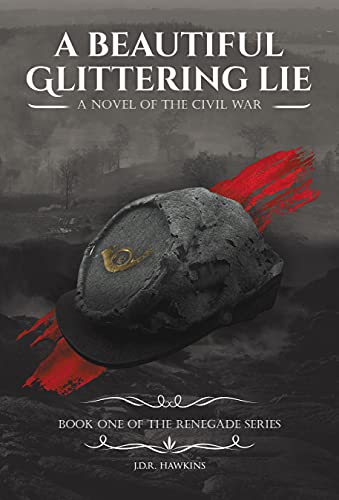
1. A Beautiful Glittering Lie by J.D.R. Hawkins
Let’s start with a gem. A Beautiful Glittering Lie kicks off the Renegade Series and puts readers right into the chaos of war—through the eyes of a Southern family in Alabama. This isn’t just about cannon fire and uniforms. It’s about fathers and sons, loyalty, and the cost of fighting for what you believe in.
Hawkins, one of the few female Civil War authors, writes with a voice that’s both sharp and emotional. You’ll feel like you’re living through the conflict right alongside her characters. It’s no wonder this novel snagged the John Esten Cooke Fiction Award.
2. A Beckoning Hellfire – Also by J.D.R. Hawkins
The second book in the series follows David Summers as he leaves home and heads straight into the fire of battle. Hawkins paints a vivid picture of what it meant to be a young soldier in the Confederate cavalry—excitement, confusion, fear, and grit. This book doesn’t sugarcoat war. It’s raw, it’s real, and it sticks with you long after the last page.
3. A Rebel Among Us – J.D.R. Hawkins Again (Yeah, She’s That Good)
By book three, the war takes a strange twist for David. Injured and far from home, he ends up hiding in a Northern household. What follows is an intense, emotional rollercoaster of trust, deception, and unexpected connection. This book digs deep into personal identity, compassion, and the strange ways war can blur the lines between enemy and friend.
Why These Books Matter
J.D.R. Hawkins doesn’t just tell war stories. She tells human stories. Her characters are fully fleshed out, her descriptions are vivid, and her research is rock-solid. Whether you’re a history buff or someone who just wants a great read, her Renegade Series offers a fresh take on the Civil War from a rarely told perspective.
Plus, these stories aren’t just about battles—they’re about resilience, family, and surviving the kind of hardship that tests everything you stand for.
FAQs
Q: Do I need to read the Renegade Series in order? Yes, it’s best to start with A Beautiful Glittering Lie and move forward. The character development builds with each book.
Q: Are these books historically accurate? Absolutely. J.D.R. Hawkins is known for her deep research and attention to historical detail.
Q: Can teens read these books? Yes, but they’re best for older teens due to mature themes around war and loss.
Conclusion
If you want a deeper understanding of the Civil War, these historical fiction books deliver something textbooks never could—real emotion, gripping storytelling, and unforgettable characters. Ready to dive in? Start with J.D.R. Hawkins, and you might just get hooked.
For this week only, Fool’s Gold Folly, in eBook format, is on sale through Amazon for only 99 cents! Now is you chance to pick up my new book for half price! And don’t forget, Fool’s Gold Folly is now also available on Audible!
Here are a few more flattering reviews for Fool’s Gold Folly that I recently received on Goodreads. Once again, thank you for your support, and thank you, Jackie, Brian Smith, and Logan Shaw, for the awesome five-star reviews!
A beautiful tale of grit, love, and hope. I was instantly swept into Patrick and Briana’s world and found myself rooting for them through every hardship. The historical setting felt authentic, and the family’s resilience brought tears to my eyes. Highly recommended for fans of historical fiction with soul.
This book reminded me how deeply immigrants have shaped the American story. The Mulligans are a lovable family, and their journey—from discrimination in Denver to chasing gold in the mountains—is both emotional and inspiring. I couldn’t put it down!
I’ll have to admit, I don’t check Goodreads as much as I should. Upon looking today, I came across some awesome reviews that were posted for my novel, A Beautiful Glittering Lie. This is the first book in the Renegade Series, which tells the story of a family from north Alabama and how the Civil War impacts them. Thank you so much, Harold Cheetham, Donna Weir, and Amber E., for your amazing reviews!
Another great Civil War novel. Plenty of action. I look forward to reading more in the series. Received a complimentary copy of the book from the author via Voracious Readers Only.
J.D.R. Hawkins really places you into the Civil War with this book. For someone who is not a history buff, the beginning starts off a little slower. The storyline and characters draw you in and keep you reaching for the next chapter. Making this a book that is hard to put down. Can’t wait to continue this adventure with the next book.
The book itself was really good. Granted, it did take me a while to get into it. I was also reading the promotional copy, so it was hard to read because the font was super small & not able to be adjusted. Which was likely the reason it took me so long to be able to read it.
I would like to share with you one of my favorite scenes from my novel, A Beckoning Hellfire. This is the second book in the Renegade Series, which tells the story of several families and how their lives intertwine during the Civil War.
This excerpt takes place on June 4, 1863. A ball was held at Culpeper Court House, Virginia, days before the Battle of Brandy Station took place on June 9, 1863. (The court house is still there today.) The Battle of Brandy Station was the largest cavalry battle to ever take place on American soil. I hope you enjoy this trip back in time!
On the evening of June 4, Major Ivey Lewis ordered David to deliver a dispatch to General Stuart, which wasn’t unusual since he had been summoned as a courier several times during the past few weeks. Although he was physically tired and emotionally drained from a long week of drilling, he obediently stuck the sealed envelope in his pocket, saddled Renegade, and received directions to the Culpeper Court House.
Once he rode up, he was awestruck by the enchanting scene. Belles in beautiful ball gowns of every color stood out on the lawn with officers attired in dress uniforms. Lively music floated through the air. The song was “Cindy,” one of his favorites.
David couldn’t help but smile as he dismounted. “What’s all this?” he asked a servant, who took hold of Renegade’s reins.
“Massa Stuart’s havin’ a grand ball, suh,” the tall, bearded black man said. “He invited ladies from the whole vicinity. Most came by rail, all the way from Richmond.”
David raised his eyebrows and grinned at the slave. “Is that a fact?” he asked.
“Sho is.” The servant smiled with a nod before tying Renegade to a post.
With eager anticipation, David sauntered toward the courthouse entrance and absorbed the sumptuous sight. The grounds, illuminated with Chinese lanterns, invited him closer. Southern gentry milled around in the warm evening air, the hum of their genteel conversations filling his ears, along with the clink of goblets tapping together. The sky glittered with fireflies, and the lawn was swathed in candlelight. Another song commenced. David recognized that melody as well: “Cumberland Gap.”
He climbed the steps and entered the courthouse, immediately enthralled by what he saw. Couples in ballroom attire danced joyfully in the center of the room, swirling in time to the melody like wispy dandelion seeds floating in the breeze. Several musicians congregated together toward the back of the room, and they appeared to be enjoying themselves just as much. Chatter and laughter intermingled with their lively music. Chandeliers of flickering candles hung from the rafters, and the sweet scent of perfume drifted through the air.
David made his way through the crowd, suddenly mindful of how ordinary he looked. Bashfully, he smiled at the ladies, but they haughtily glanced over him before turning away toward their escorts. He noticed a table of wine, punch, and viands off to the side, which sparked his voracious appetite. The thought crossed his mind that perhaps he could sneak a few tidbits into his pockets on his way out. Spotting General Stuart, he made his way over to him.
“Sir,” he said with a salute.
The general turned from the belle he was conversing with, noticed David, and saluted back.
“I have orders to deliver this to you personally.” David handed him the envelope that had been sealed with wax.
“Very good, Private,” Stuart said.
The general didn’t seem to recognize him. Disappointed, David saluted again and awkwardly remained at General Stuart’s side, waiting for a response. Stuart turned away. Without knowing quite what to do next, David stood there for a few seconds before deciding he had been cold-shouldered, so he turned and made his way back toward the door.
He paused to watch the musicians, who were surrounded by admiring ladies. They stopped their performance momentarily, allowing for applause before proceeding to play “Ring, Ring the Banjo.” Two fiddlers enthusiastically sawed on their instruments. A dark-haired, mustachioed man plucked away on his banjo, and a mulatto servant smiled widely as he played the bones. David remembered what the other troopers had told him about General Stuart’s mulatto footman, Bob, and about the banjo player, Sam Sweeney, who was said to be the brother of the man who had invented the banjo. He also heard that General Stuart was a music lover who never missed an opportunity to be entertained by his musicians. If only they had a guitar, he might find the courage to go up there and sing alongside them, but his heart was too heavy for him to feel exuberant enough to sing. He wished Jake were there to see the grandiose scene. It was so dazzling that he felt like he was in a fairy tale.
He glanced around the room, reminded again of how out of place he was. The young ladies looked upon him with disdain, obviously repulsed by his shabby appearance. The musicians began to play “Cavalier’s Waltz,” prompting dancers to swirl around in synchronized whirlwinds. To his dismay, the food table was too far away for him to attempt thievery without being noticed, so he reluctantly turned and went outside. He met Colonel Von Borcke on the way out and discovered by standing next to him that the Prussian was enormous. The colonel recognized him immediately.
“I’m looking forward to racing your little horse!” he said, laughing as he walked into the courthouse.
David was left alone on the portico. Once again, he wished he could be a part of the celebration, but instead, he let out a sigh, climbed up on Renegade, and rode off into the darkness.
I have received several emails in regard to my latest book, Fool’s Gold Folly, and would like to share some of them with you. This book ties in with the Renegade Series, and tells the story of one of the minor characters, Patrick Mulligan. Patrick’s desire to strike it rich in Colorado after the Civil War turns into something much more than gold lust. Here is what fans have to say:
(From Camille Rhodes Brown)
I came across Fool’s Gold Folly, and from the first lines of your description, I felt its pulse the lure of possibility, the grit of survival, and the fragile line between hope and danger. Patrick Mulligan’s journey isn’t just about gold; it’s about the deep human hunger for a better life and the resilience it takes to chase it.
You’ve given readers more than a historical adventure — you’ve given them a window into the Irish immigrant experience during one of the most volatile times in American history. The wilderness of Colorado Territory, the raw hunger for fortune, and the bonds of friendship forged in hardship all feel alive in your telling. Silas Garvey’s presence, with his dark secret and failing health, adds a poignancy that makes this story not just gripping but deeply human.
(From Grace Champ)
I just finished reading Fool’s Gold Folly, and I was deeply moved by Patrick Mulligan’s journey not just westward, but inward, as he confronts the promises and perils of a country still healing from war. His resilience, ambition, and the fragile friendships he forms in Breckenridge capture something truly special: the heart of the immigrant dream set against the raw edge of frontier life.
You’ve brought to life a piece of history that still feels incredibly relevant: the push for new beginnings, the weight of personal loss, and the quiet strength of Irish communities carving out space in post-Civil War America.
Thank you so much, Grace and Camille, for your kind words!
I am always looking for positive reviews, so please post your reviews to Amazon and/or Goodreads. And don’t forget, this novel is available as an audio book too!
My latest book, Fool’s Gold Folly, has made it into round three of the best cover of the month. The contest is held by AllAuthor. It is really exciting to have my book make it this far! If you haven’t yet voted for the cover, please do! If you already voted, please vote again! Thank you so much! Here is the voting link: https://allauthor.com/cover-of-the-month/19730/
I wanted to share a few more reviews of the book with you. These are all five-star reviews posted on Goodreads. Thank you, Logan Shaw, Jackie, Clifford Day, Julius J., and Daniel Rumley for your amazing reviews!
This book reminded me how deeply immigrants have shaped the American story. The Mulligans are a lovable family, and their journey—from discrimination in Denver to chasing gold in the mountains—is both emotional and inspiring. I couldn’t put it down!
A beautiful tale of grit, love, and hope. I was instantly swept into Patrick and Briana’s world and found myself rooting for them through every hardship. The historical setting felt authentic, and the family’s resilience brought tears to my eyes. Highly recommended for fans of historical fiction with soul.
Clifford Day –
I was so enthusiastic for this book and, of course, I didn’t have a chance to get on. All-in-all I really enjoyed the book. I’ll definitely be reading more by this author.
Julius J. –
The story was remarkable, kept me absorbed all throughout.
Daniel Rumley –
LOVE it! The author has such a dazzling way of keeping you engrossed with words.




 J.D.R. Hawkins