Family stories give history a human face. During the American Civil War, parents, children, siblings, and spouses faced choices shaping daily life. Readers who value close family bonds seek the Best Civil War historical fiction for characters whose lives unfold alongside major events.
In my Renegade Series, I follow the Summers family from Alabama through the war and into Reconstruction, placing personal relationships at the center of a changing nation. The family remains the story’s steady thread.
Why Do Family Stories Matter in Civil War Fiction?
Readers searching for the Best Civil War historical fiction value a story that connects public events with private lives. Family roles, personal loyalties, and daily work give the historical setting a clear human scale.
I built the Renegade Series around this connection. The four novels follow the Summers family through the conflict and its aftermath, set in Alabama and told from a Confederate viewpoint. I place fictional lives within researched events and follow the people behind the dates.
Which J.D.R. Hawkins Novels Should Family Story Readers Start With?
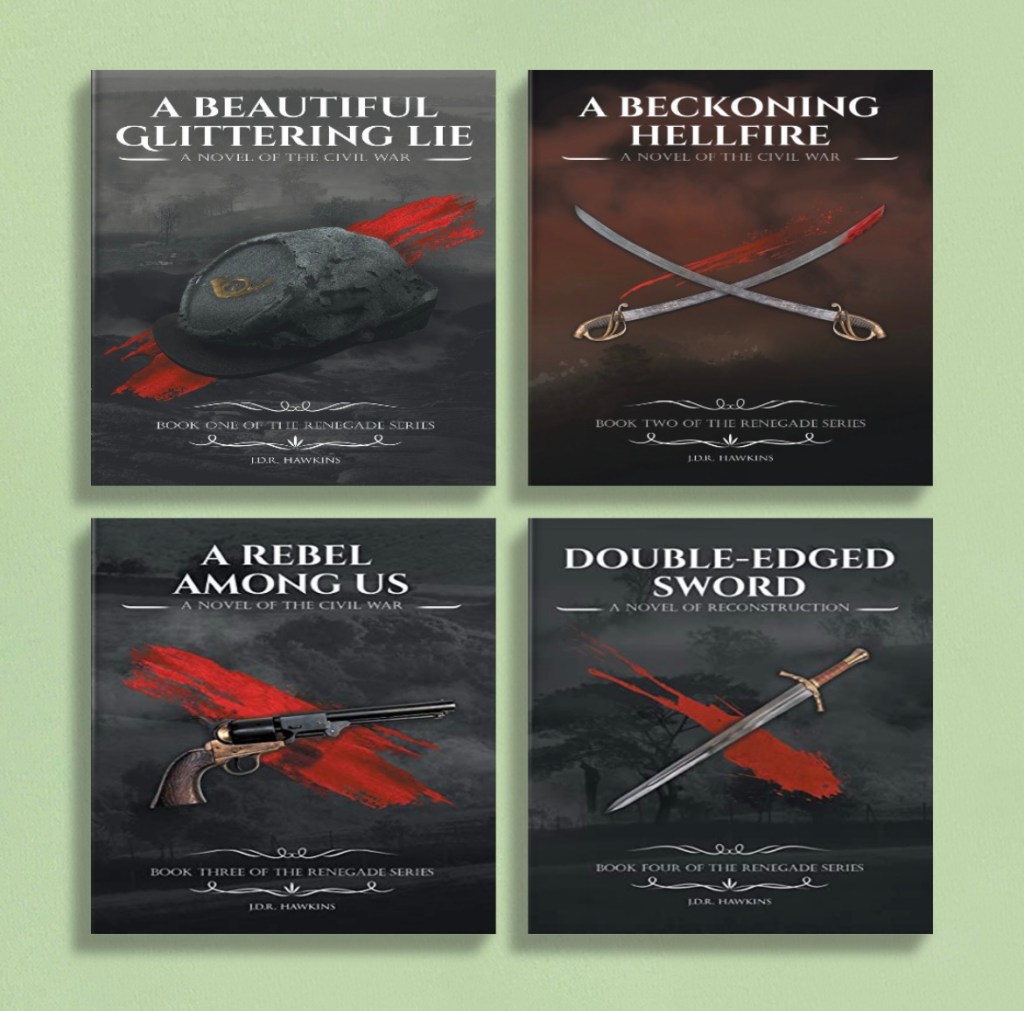
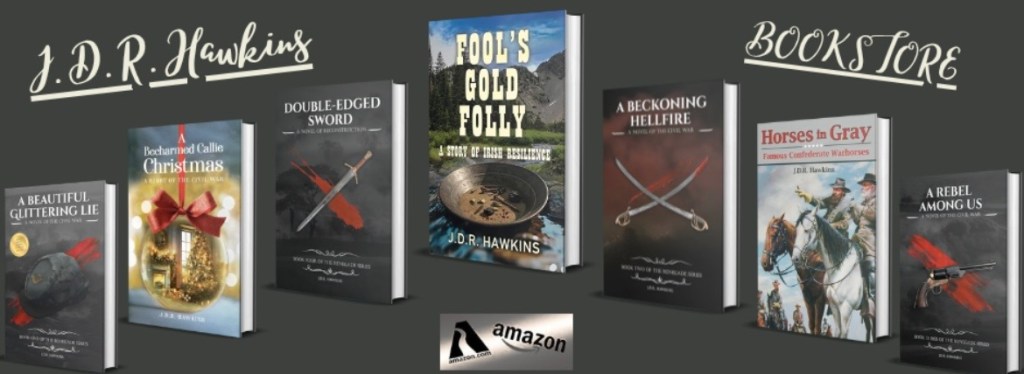
A Beautiful Glittering Lie: A Novel of the Civil War The first book introduces Hiram Summers, an Alabama farmer and father who enlists in 1861. His wife, Caroline, manages the farm while their son, David, stays home with his sisters. David seeks adventure with his friend, Jake, giving the story a young person’s view of a country at war. The novel moves between Hiram’s experiences with the Fourth Alabama Infantry and the family’s life at home. The book won the 2013 John Esten Cooke Fiction Award and a B.R.A.G. Medallion. Reading the novels in sequence keeps each family change and character connection clear.
A Beckoning Hellfire: A Novel of the Civil War The second novel follows David as battle changes his ideas about military life. His growing experience adds depth to the Summers family story. It won the B.R.A.G. Medallion Award.
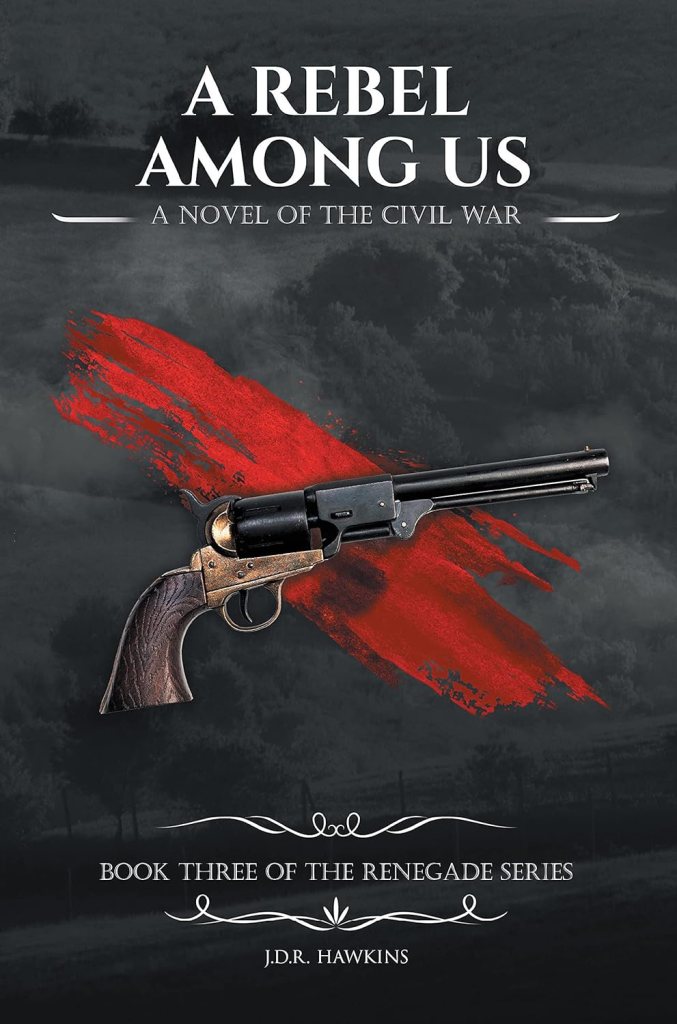
A Rebel Among Us: A Novel of the Civil War After the Battle of Gettysburg, David suffers a battle injury and reaches a farmhouse where three sisters live. Anna, the eldest, presents him with a proposal that tests his loyalties. Their household becomes the center of a story about trust, affection, and hard choices. The novel won the 2017 John Esten Cooke Fiction Award and a B.R.A.G. Medallion.
Double-Edged Sword: A Novel of Reconstruction Readers seeking the Best Civil War historical fiction for a family-focused read will find this volume adds the years after the fighting and completes the family’s wider journey. It also won the 2023 John Esten Cooke Fiction Award and the B.R.A.G. Medallion. The book carries the Summers’ story into Reconstruction. David returns to Alabama with his new wife and begins building a life after the war. His family relationships develop within a changed community and a new chapter of American history.
What Should Readers Look for in a Family-Centred Civil War Novel? A strong family novel gives each character a clear role. Look for stories with different ages and viewpoints, from parents managing a home to young adults finding their place. Historical detail matters too. Accurate settings, period customs, and real events give the family story a firm foundation.
● A connected family timeline: A series that follows characters across several years gives relationships room to grow and change.
● A clear historical setting: Specific places, military events, and daily details help readers picture the world around each family.
Pick Your Favorite Today If you enjoy historical novels that place family relationships at the center of major events, I invite you to discover the Renegade Series. Start with A Beautiful Glittering Lie and follow the Summers family through the Best Civil War historical fiction experience I have created.
Frequently Asked Questions
Are J.D.R. Hawkins’ Civil War novels connected? Yes. The four Renegade novels follow the Summers family from the opening of the Civil War through Reconstruction. Reading them in order gives readers a continuous view of the family’s relationships, choices, and changing lives.
Which book introduces the Summers family? A Beautiful Glittering Lie introduces Hiram, Caroline, David, and the rest of the Summers family. The story begins in 1861 and follows the family as Hiram leaves Alabama to join the Confederate army.
Do the novels include life away from battlefields? Yes. The series gives space to farm work, family duties, letters, friendships, courtship, and life in Alabama. These details place military events beside the routines and relationships that shape each character’s day.
Does the series continue beyond the Civil War? Yes. Double-Edged Sword follows David into Reconstruction after he returns to Alabama. The novel extends the family saga into the postwar years and follows the changes that shape his home and relationships.
Where are the books available? Readers will find the Renegade novels, book descriptions, and purchase options on my official website, jdrhawkins.com. The site also features author information, updates, and details about my other titles.
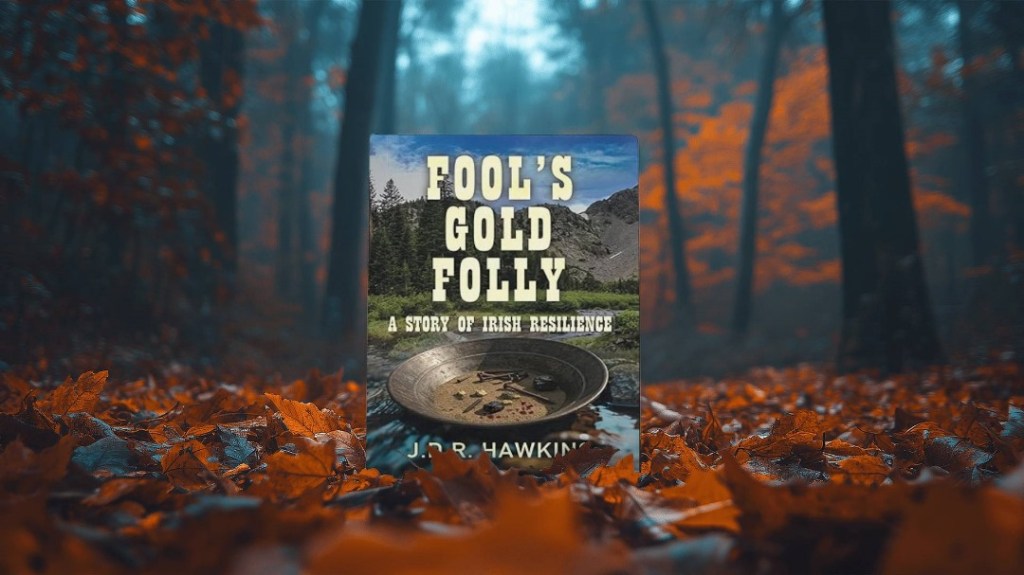
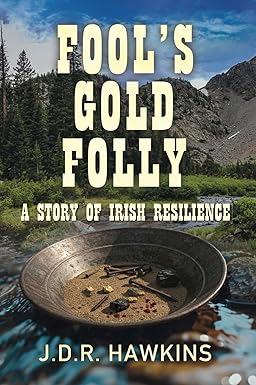
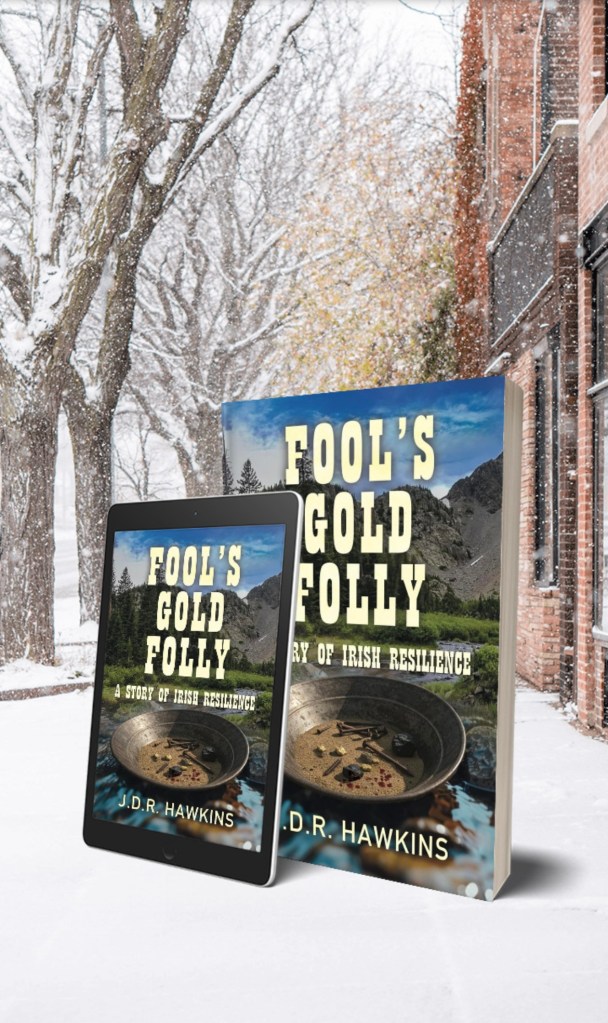
I received an amazing five-star review from Diabolic Shrimp for my latest book, Fool’s Gold Folly. The novella goes along with the Renegade Series and tells the story of one of the minor characters. When the Civil War ends, Patrick Mulligan takes his family out west in search of gold. But what he finds there is far more valuable.
I’d like to thank Joshua Grant and Diabolic Shrimp for this review! Learn more about Diabolic Shrimp on their website, Diabolic Shrimp – Books and Shrimp! There you can find out about other reviewed books, comics, games and film, and their mission. You can also join and enter the shrimpy awards contest! And as a side note, Fool’s Gold Folly is featured in Diabolic Shrimp’s latest comic, The Fifth Ascendant!
Review by Diabolic Shrimp
J.D.R. Hawkins brings the Wild West to life in an exciting and heartfelt tale with Fool’s Gold Folly! In the wake of the American Civil War, Irish immigrant Patrick Mulligan seeks to start a new life in the rugged mountains of Colorado. But upon moving there, he discovers that life in the heart of the gold rush isn’t as simple, or safe, as he hoped. Hawkins always does an amazing job of bringing the time period to life, and as a Coloradan myself, it was really fun to see this turbulent time period dramatized in perfect detail. Hawkins also has excellent character development, since I loved following Patrick and his family, and I was especially drawn in by the wise old character of miner Silas and the mystery he added to everything. This is an excellent story that perfectly blends history, the colorful flare of the Wild West, and deep meaningful storytelling. If you love stories about the Wild West that revolve around realistic and likeable characters, definitely heft your pickaxe and come prospecting with Fool’s Gold Folly!
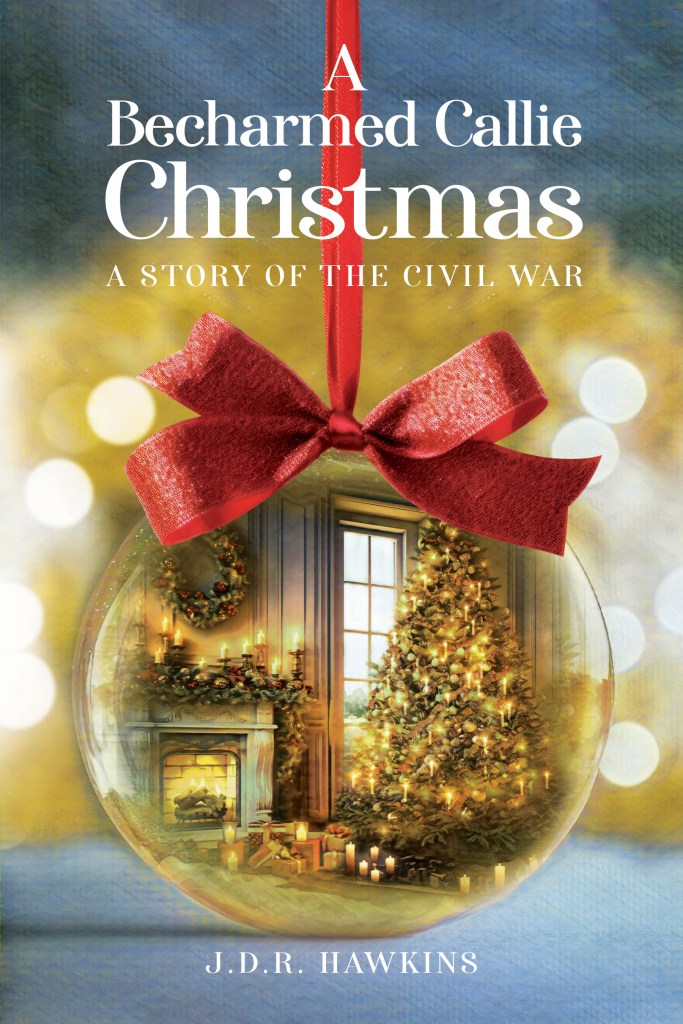
Recently, I received an email from D DiAnn asking me if I would like her to post a review of my novella, A Becharmed Callie Christmas, on Goodreads. Of course, I would! The review is as follows. This book is a side story that accompanies the Renegade Series and describes what Christmas 1862 was like for one of the minor characters in the series, Callie Mae Copeland. Callie has just turned sixteen and is looking forward to Christmas. But with the Civil War looming just outside her door, she wonders if it will be the last Christmas she’ll ever spend in her home, and if Christmas will ever be the same again. Thank you so much, D DiAnn, for your five-star review!
This is a short one. Sixty three pages. But J.D.R. Hawkins packs a lot into those pages.
Callie Mae Copeland is sixteen, spoiled, and used to getting her way. The Civil War is in its second year but it has not touched her corner of north Alabama yet. She is more concerned with her Christmas gown and the annual Copeland party than with what is happening out there. She flirts. She schemes. She convinces her father to buy fabric they can barely afford. She wants everything to be perfect.
And then the war shows up anyway.
What I liked most about this book is how Hawkins uses Christmas as a backdrop for something darker. The party happens. The gown is beautiful. But you can feel the ground shifting underneath. Callie is not a hero. She is a young girl who has been protected from reality, and you watch that protection start to crack. By the end, you understand that nothing will ever be the same for her.
The writing is warm and detailed. Hawkins knows this world. She writes the South from the inside, which makes the story feel lived in rather than researched. The Christmas setting adds a bittersweet layer. You know what is coming. Callie does not. That gap creates real tension.
My only complaint is that I wanted more. It is a novella, a bridge between books, and it does its job well. But Callie is such a strong character that I wished the story had more room to breathe. Fans of the Renegade series will enjoy this. New readers can start here and get a taste of what Hawkins does best. A quiet, sad, lovely little book.
I just received word that I am being featured in an article published in Vanity Stardom. This is a very flattering article, and I’m honored to be featured! Here is the article.
J.D.R. Hawkins and the Human Story Behind the Renegade Series
J.D.R. Hawkins brings the American Civil War to life through the Renegade Series, blending historical research, moral complexity and deeply human storytelling.
Published 28 September 2026 at 19:50 IST8 min read
Courtesy of J.D.R. Hawkins / Author’s official materials
Key takeaways
J.D.R. Hawkins is the author of the four-book Renegade Series of Civil War historical fiction.
The series follows the Summers family through the Civil War and into the Reconstruction era.
Hawkins explores the conflict through a Southern and Confederate perspective while focusing on individual experiences and family relationships.
Her books combine historical research with fictional characters, battles, personal dilemmas and the consequences of war.
Hawkins has also written Horses in Gray: Famous Confederate Warhorses, a nonfiction work about horses during the Civil War.
The American Civil War has been examined through history books, memoirs, biographies and countless works of fiction. Yet the subject continues to find new life in literature because the conflict was never only about battlefields and military campaigns. It was also about families separated by war, young people confronted with decisions they could not fully understand, communities transformed by violence and individuals trying to make sense of a country coming apart.
For author J.D.R. Hawkins, those human experiences became the foundation for the Renegade Series, a four-book historical fiction saga that follows a family from north Alabama through the Civil War and into Reconstruction. Her work approaches the period through characters connected to the Confederate South, while keeping the consequences of war at the centre of the story.
The result is a body of fiction that places historical events alongside personal relationships, difficult choices and the consequences that continue long after a battle has ended.
Hawkins’ interest in the Civil War developed into a long-term writing project rather than a single novel. Her academic background in journalism at Iowa State University provided an early foundation for research and storytelling, while her broader writing career included work across short stories, articles and children’s literature before she turned increasingly toward historical fiction.
The decision to write from a Southern perspective also gave the project a particular narrative challenge. The Civil War remains one of the most heavily examined periods in American history, and fictionalising it requires more than recreating uniforms, weapons and battle locations. Historical fiction has to make the period understandable through people. Hawkins’ books therefore use the experiences of individual characters to explore what a war of national consequence meant inside an ordinary family.
That approach is evident from the beginning of the Renegade Series.
The first novel, A Beautiful Glittering Lie, introduces the Summers family in north Alabama in 1861. Hiram Summers, a farmer and father, decides to enlist and eventually travels to Virginia with the Fourth Alabama Infantry Regiment. At home, his wife Caroline attempts to keep the family and farm together while their son David begins to confront the reality of a conflict that initially exists for him largely through stories, expectations and youthful curiosity.
The novel’s focus on the Summers family allows the war to be seen from more than one location. Hiram experiences the conflict from the military front, while Caroline and the children experience its absence, uncertainty and consequences at home.
That separation becomes an important element of Hawkins’ storytelling. War is not presented only through what happens when soldiers meet on a battlefield. It is also present in letters, waiting, fear, changing relationships and the difficult process of maintaining a household while someone is away fighting.
The first book established the foundation for what would become a much larger family story. It also received recognition from historical-fiction organisations, including the B.R.A.G. Medallion and the John Esten Cooke Fiction Award. Hawkins’ official book information lists A Beautiful Glittering Lie as a winner of the 2013 John Esten Cooke Fiction Award and the B.R.A.G. Medallion.
The series continued with A Beckoning Hellfire, taking its characters further into the realities of the conflict. The story becomes increasingly concerned with what combat does to individuals and how earlier decisions continue to shape the lives of those involved.
David Summers becomes an especially important figure in that progression. His development is not simply the journey of a fictional soldier moving from one battle to another. His understanding of war changes as his experiences become more personal. The distance between youthful expectations and the reality of combat gradually disappears.
With A Rebel Among Us, Hawkins moves further into the moral uncertainty created by war. David is seriously wounded and separated from the Confederate army following military campaigns, eventually finding himself at a farmhouse occupied by three sisters. His circumstances force him into choices that challenge the principles and loyalties that originally shaped his decision to fight.
The premise allows Hawkins to explore one of the central characteristics of historical fiction: individuals rarely experience history in the neat categories that later generations use to describe it.
David has to make decisions as a person rather than as a historical symbol. Loyalty, survival, family, personal principles and fear can pull in different directions. The official description of the novel centres on this dilemma, particularly the conflict between helping Anna and risking capture or remaining loyal to the reasons that brought him into the war.
That emphasis on individual decisions is one of the distinguishing features of the series.
Hawkins has described the Renegade books as a family saga as much as a war story. The four novels follow the Summers family across a much wider period than the opening months of the conflict, allowing the consequences of the Civil War to extend beyond the moment when fighting stops.
That becomes especially important in Double-Edged Sword: A Novel of Reconstruction, the fourth major volume in the series. The story moves into the Reconstruction period, when the formal conflict has ended but the social and personal consequences remain.
For a family that has spent years living through war, peace does not necessarily mean returning to the world that existed before 1861. The country has changed, communities have changed and individuals have changed. By extending the narrative into Reconstruction, Hawkins treats the aftermath as part of the historical story rather than simply an epilogue.
The four novels therefore form a continuous arc. The opening book introduces a family entering an uncertain conflict. The following stories explore the physical and emotional consequences of that conflict, while the final volume examines what happens when the fighting is over but its effects remain.
The historical research behind the novels is another significant part of Hawkins’ approach. Her work has been recognised for incorporating historical settings and events into character-driven storytelling. In discussing her research and setting choices, Hawkins has explained that the first Renegade novel moves between north Alabama and Virginia battlefields, using historically grounded locations to connect the fictional family with the wider events of the war.
Reviews of A Beautiful Glittering Lie have similarly highlighted the combination of historical events and the Summers family’s personal story. Pacific Book Review noted the use of historical battles, events, songs and figures, while also describing the book as an intimate portrait of the family.
This balance is central to why historical fiction continues to attract readers. Facts establish the world, but characters give readers a reason to remain inside it.
Hawkins has also expanded her writing beyond the main Renegade novels. Her nonfiction book Horses in Gray: Famous Confederate Warhorses examines the role of horses during the Civil War, while A Becharmed Callie Christmas adds another story connected with the world of the series. Her current author catalogue also includes Fool’s Gold Folly, another story connected to her wider body of historical fiction.
Her professional interests extend into several literary organisations, including the Historical Novel Society, International Women’s Writing Guild, Rocky Mountain Fiction Writers and Pikes Peak Writers. She is also associated with the United Daughters of the Confederacy and has pursued creative work outside fiction as an artist and singer/songwriter.
The recognition surrounding the Renegade Series has also continued across multiple books. Hawkins’ official author materials identify the series as having received multiple John Esten Cooke Fiction Awards and B.R.A.G. Medallions, while the B.R.A.G. Medallion organisation lists the series and its individual books within its historical fiction catalogue.
But awards are only one part of the story.
What makes Hawkins’ work particularly notable is the decision to keep returning to a period that has already been extensively fictionalised and to look at it through a specific set of characters and circumstances. The Confederate perspective is an important part of the series, but the novels are ultimately structured around people rather than political arguments.
That distinction matters when writing historical fiction about a conflict as deeply contested as the Civil War. A character can possess beliefs shaped by his time without the novel requiring readers to accept those beliefs as historical truth. Fiction can instead examine how those beliefs influenced decisions, relationships and consequences.
In Hawkins’ case, that creates room for a story about the people who lived through the period without reducing them to simple categories.
The Renegade Series asks readers to follow a family through uncertainty rather than simply follow a timeline of famous events. Battles matter, but so do the moments between them. The letters, the conversations, the separation from home and the decisions made under pressure provide the emotional structure of the story.
That may be why the series has continued to find an audience among readers interested in Civil War fiction. Historical knowledge can tell us what happened. Fiction has the more intimate task of imagining what it might have felt like for individuals living through those events.
For J.D.R. Hawkins, that distinction has shaped an entire literary career.
Her work does not attempt to reduce the Civil War to a single experience. Instead, through the Summers family and the wider world of the Renegade Series, she has created a sustained fictional account of how war can enter a household, reshape relationships and continue affecting people long after the battlefield falls silent.
The enduring appeal of the series lies in that human scale. The Civil War may have been a defining national conflict, but for the characters Hawkins writes about, it was also a collection of personal moments: a decision to enlist, a letter from home, a family waiting for someone who may never return, a young person discovering that war is different from what he imagined, and eventually the difficult task of rebuilding a life after the fighting ends.
Through that lens, Hawkins continues to explore one of the most familiar periods in American history in a form that remains personal, character-driven and grounded in historical research. Her Renegade Series stands as an extended literary interpretation of the Civil War and Reconstruction, told through the experiences of a fictional Southern family whose lives are permanently altered by the events around them.
Last week, I was notified that I was featured in an article published by USA Today on September 4. I can’t express enough how flattered I am to be featured in such a prestigious publication! I have posted it here for your review. Let me know what you think! Thanks again for all your ongoing support!
Where History Finds Its Human Voice: How J.D.R. Hawkins Turned America’s Most Divisive Era Into Award-Winning Fiction
Updated Sept. 4, 2026, 8:16 a.m. ET
History has never struggled to preserve dates. It remembers battles, treaties, political speeches, and the names etched into monuments. What history often leaves behind are the quieter stories, the families separated by conflict, the ordinary people forced to carry extraordinary burdens, and the moments between the headlines where fear, hope, and resilience truly lived. That space between documented fact and human experience is where historical fiction continues to prove its enduring value.
Few periods challenge writers more than the American Civil War. More than a century and a half later, it remains one of the most examined chapters in American history, producing countless biographies, documentaries, and academic works. Yet writing fiction about the conflict demands something entirely different. It requires an author to respect history without becoming imprisoned by it, to balance research with imagination, and to create characters capable of making readers feel the weight of events they already know. The finest historical novels do not attempt to rewrite history. Instead, they restore humanity to it.
That challenge has defined the literary career of J.D.R. Hawkins, an American author whose work has quietly earned a respected place within modern historical fiction. Through meticulous research, emotionally driven storytelling, and a willingness to explore perspectives that relatively few contemporary novelists choose to examine, Hawkins has built a body of work that extends beyond entertainment. Her novels invite readers to experience the Civil War not through generals or politicians, but through families whose lives were permanently altered by the nation’s defining conflict. In doing so, she has become one of the few female authors recognized for writing extensively from a Confederate perspective, while earning awards, bestseller recognition, and a loyal readership that continues to grow.
A Writer Before She Ever Became an Author
Long before her books appeared on bestseller lists or collected literary awards, Hawkins was simply a child fascinated by stories.
Born on June 9, 1959, in Sioux City, Iowa, she discovered writing during elementary school, where stories became less of an assignment and more of an instinct. While many childhood interests disappear with age, this one never did. Encouraged by parents who valued education as much as creativity, she pursued both, eventually earning a Bachelor of Science in Journalism from Iowa State University.
Journalism proved to be more than a degree. It shaped the discipline that would later define her novels. Reporters learn to verify facts before telling stories, and Hawkins carried that philosophy into fiction. Before writing novels, she experimented with short stories, magazine articles, and children’s literature, gradually developing a style that favored careful observation over dramatic excess.
That patience would eventually become one of her greatest strengths. Rather than chasing publishing trends or writing across multiple commercial genres, Hawkins chose a path requiring years of historical research and remarkable attention to detail.
Choosing the Hardest Story to Tell
Historical fiction is demanding under any circumstance. Writing about the Civil War introduces another layer of complexity.
Every battle, every political decision, and every social consequence continues to be debated today. Authors entering that space often face an impossible balancing act between historical accuracy and emotional storytelling. Hawkins approached the challenge differently. Instead of allowing politics to dominate her narratives, she placed ordinary lives at the center of extraordinary events.
Her novels ask readers to consider not simply how wars are fought, but how families survive them.
That perspective would eventually become the foundation of what is now recognized as her signature achievement.
The Renegade Series: A Family Saga Woven Into American History
Some authors become known for a single novel. Others build careers around a literary universe that grows richer with every installment.
For Hawkins, that universe became the Renegade Series, an ambitious collection of novels following the journey of a Confederate cavalryman and his family through the Civil War and the difficult years that followed. Rather than presenting isolated adventures, the books function as an evolving family saga, allowing readers to witness not only the destruction of war but also the emotional cost carried long after the fighting ends.
The series opened with A Beautiful Glittering Lie , a novel that immediately established Hawkins’ commitment to historical authenticity. Instead of treating the Civil War as a sequence of famous battles, the story narrowed its focus to people whose names never appeared in history books but whose struggles reflected those of thousands of real families. The novel resonated with both readers and literary judges, earning the 2013 John Esten Cooke Fiction Award and the 2012 B.R.A.G. Medallion, recognition that positioned Hawkins as an emerging voice within historical fiction.
Rather than viewing that success as a conclusion, Hawkins expanded the story with A Beckoning Hellfire, where the realities of war deepen and the emotional stakes become increasingly personal. The novel further strengthened the series’ reputation, later receiving another B.R.A.G. Medallion while demonstrating Hawkins’ ability to sustain both historical depth and narrative momentum.
The third installment, A Rebel Among Us, continued exploring the conflict through the eyes of individuals whose personal convictions collided with national upheaval. The novel earned the 2017 John Esten Cooke Fiction Award and the B.R.A.G. Medallion, reinforcing Hawkins’ growing reputation for combining historical precision with compelling character development.
The journey continued beyond the battlefield with Double-Edged Sword: A Novel of Reconstruction, perhaps the series’ most ambitious chapter. Reconstruction remains one of the least understood yet most transformative periods in American history, and Hawkins shifts her attention toward the uncertain future awaiting families after the war had officially ended. The novel received both the 2022 B.R.A.G. Medallion and the 2023 John Esten Cooke Fiction Award further confirming the consistency of her work across the series.
Collectively, the Renegade Series reflects more than a sequence of novels. It represents years of historical research transformed into stories that emphasize the human experience behind one of America’s most defining eras.
Expanding a Literary Portfolio Beyond One Series
Although Civil War fiction remains central to Hawkins’ career, her bibliography reflects a writer unwilling to remain confined to a single project.
Her nonfiction work, Horses in Gray: Famous Confederate Warhorses, explores an often-overlooked aspect of military history. Rather than focusing on generals or battlefield strategy, the book highlights the remarkable horses that carried soldiers through one of the nation’s bloodiest conflicts, offering readers a unique perspective on the role animals played during wartime.
She also returned to the fictional world of the Renegade Series through A Becharmed Callie Christmas, a historical Christmas story that later earned the 2025 Best Historical Christmas Fiction Award. While lighter in tone, the novella demonstrates Hawkins’ ability to revisit established characters without sacrificing historical atmosphere.
Her writing interests have also extended beyond historical fiction. Success Mindsets: How Top Entrepreneurs Succeed in Business and Life revealed another side of Hawkins as she explored leadership, personal growth, and professional success. The project showed that the qualities defining her fiction, discipline, curiosity, and thoughtful observation, could translate into nonfiction as well.
Most recently, Fool’s Gold Folly: A Story of Irish Resilience, also a part of the Renegade Series, continues her fascination with history while broadening both her geographical and cultural focus.
Together, these works illustrate an author whose creative interests continue to evolve while remaining rooted in storytelling.
Recognition Earned Through Consistency Rather Than Hype
Publishing often rewards visibility. Hawkins has built her reputation through consistency.
Across her career, her books have collected multiple John Esten Cooke Fiction Awards, several B.R.A.G. Medallions and Maincrest Media Awards, reflecting sustained recognition rather than isolated success. Each honor represents more than a trophy; collectively, they acknowledge years devoted to historical accuracy, narrative craftsmanship, and literary discipline.
Commercial success has followed.
Hawkins has earned recognition as an Amazon, USA Today, and Wall Street Journal Journal bestselling author, demonstrating that carefully researched historical fiction continues to attract a substantial readership despite an increasingly competitive publishing landscape.
For many writers, critical recognition and commercial popularity rarely arrive together. Hawkins’ career illustrates that thoughtful storytelling can achieve both.
Research Before Recognition
What separates historical fiction from historical fantasy is credibility.
Readers may forgive fictional characters, but they rarely forgive fictional history.
That understanding has shaped Hawkins’ writing philosophy throughout her career. Her background in journalism appears throughout her novels, where historical settings are built with careful attention to documented detail rather than dramatic invention. Battles unfold within authentic timelines. Communities reflect the realities of nineteenth-century America. Everyday routines receive as much attention as major historical events.
Yet research alone cannot sustain a novel.
Hawkins combines factual accuracy with emotionally driven storytelling, ensuring that history never overshadows the people living through it. Her characters experience grief, uncertainty, loyalty, and hope in ways that feel immediate rather than distant, allowing modern readers to connect with events separated by more than 150 years.
That balance has become one of the defining characteristics of her work.
An Author Committed to the Literary Community
Beyond publishing, Hawkins remains actively engaged with organizations that celebrate both literature and history.
She is a member of the United Daughters of the Confederacy, The International Women’s Writing Guild, Rocky Mountain Fiction Writers, Pikes Peak Writers, and the Historical Novel Society, affiliations that reflect her continued involvement with fellow writers, historians, and readers.
Away from the page, Hawkins is also an artist and singer-songwriter. She has been married for more than four decades and shares a close family life with her husband, two sons, daughter-in-law, and two grandsons. While those details remain largely separate from her public literary identity, they provide the personal foundation behind a career built on patience, discipline, and creative persistence.
Writing History Without Becoming Part of the Noise
Publishing trends change with remarkable speed. Genres rise and fade. Bestseller lists evolve almost weekly.
Historical fiction, however, has always rewarded something different.
It favors patience over urgency, substance over spectacle, and research over assumption.
J.D.R. Hawkins has built her career according to those principles. Rather than pursuing the fastest path through the publishing industry, she invested years in understanding one of America’s most examined historical periods and transformed that knowledge into stories that continue to find new readers.
Her novels do not attempt to settle historical debates, nor do they ask readers to revisit the Civil War simply as an academic exercise. Instead, they remind us that history is ultimately measured not only by the events that shaped nations but also by the lives forever changed because of them.
That perspective has become Hawkins’ greatest contribution to historical fiction. In an era when publishing often rewards immediacy, she has chosen endurance. And through an expanding body of award-winning work, she has demonstrated that stories grounded in careful research, emotional honesty, and literary craftsmanship can continue to resonate long after the final page is turned.
I just received a new review from Kirkus Reviews for my novel, A Beautiful Glittering Lie. This book is the first one in the Renegade Series, which tells the story of a family from north Alabama and how their lives are impacted by the Civil War. I would like to thank Kirkus for the review. However, I’m not quite sure how to take it. I can’t tell if they liked the book or not. The review seems more like a plot summation than anything else. My experience with Kirkus Reviews is that, even though they are highly regarded in the book industry, their reviews seem to fall flat. I think this is just another example. Let me know what you think!
BOOK REVIEW
A father and son from the South experience the harsh realities of the Civil War in Hawkins’ novel.
When a divided country erupts into battle, Hiram Summers, a proud Confederate from Alabama, enlists in the fight against the Union. In his absence, he entrusts his 16-year-old son David to watch over his farm and protect the family, including his wife Caroline and his daughters Rena and Josie. David sees his father off to war with a sliver of envy in his heart; he would like to prove his manhood more than anything. Alongside his best friend Jake Kimball, the pair do their best to get a taste of the conflict that’s tearing apart the country. They sneak off to Huntsville, where not only do they get a look at the enemy, but they meet Emily Levinsworth, the daughter of an affluent citizen. So far, she’s avoided the worst of the incursion as the Yankees slowly take over the town. Soon, even she must flee, while David and Jake get too close to danger to make returning worthwhile. Hawkins writes with evident knowledge and accuracy, weaving these personal stories with specific historical details: “Making their way through intermittent, intense humidity, one-hundred-degree heat, and drenching rains, General Lee’s corps advanced across the Rappahannock on August 26.” At times, the narrative feels like a cornpone rendition of the South due to its overly affected dialogue and behavior, and readers may find the depiction of two slave characters difficult to read—they’re caricatures of dutiful obedience. The pace picks up a good deal of steam as the story jumps between the grisly frontlines with Hiram and the happenings with David at home, although this momentum is cut short at the climax. As the Christmas season approaches, the family prepares for the holidays while news continues to come in from the battlefield. But what it means for Hiram, David, and Caroline must wait—the book comes to an abrupt end that will be continued in a sequel.
A well-researched start to a Civil War saga that saves too much for its sequel.
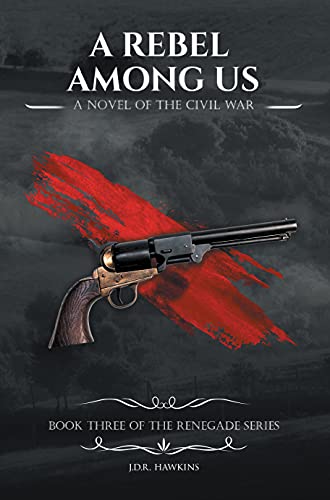
I received another five-star review for my novel, A Rebel Among Us, that I wanted to share with you. This book is the third one in the Renegade Series and tells the story of a young cavalryman from Alabama who finds himself abandoned by his Confederate comrades following the Battle of Gettysburg. The story gets more complicated from there! Thank you, Megan, for your awesome review!
A Rebel Among Us pulled me in with its combination of Civil War history, suspense, and personal conflict. David Summers is a compelling character, especially as he comes face-to-face with the brutal reality of war and begins questioning the beliefs that brought him into the Confederate army in the first place.
I really enjoyed the tension surrounding David’s situation after Gettysburg. Wounded, vulnerable, and far from home, he suddenly finds himself depending on three sisters who have their own motives and secrets. Anna’s proposition puts him in an incredibly difficult position, and I could understand why he struggled with what to do. His decision isn’t simply about survival, it forces him to confront his loyalty, his principles, and the reasons he went to war.
The historical setting feels vivid, and the story does a good job showing the human cost of conflict rather than treating the Civil War as nothing more than battles and military strategy. I especially liked the moral gray areas, because there are no easy answers for David.
The pacing kept me turning the pages, and Renegade’s role in getting David to safety adds a memorable touch to the story. This is a great choice for readers who enjoy historical fiction with suspense, romance, and characters forced to make choices where every option comes with consequences.
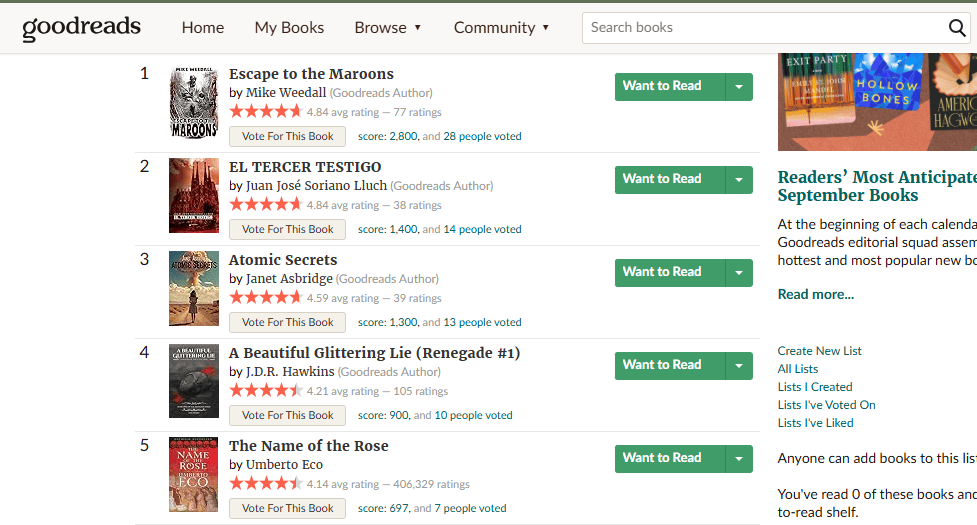
I also wanted to tell you that another one of my books, A Beautiful Glittering Lie, is climbing up the Listopia charts on Goodreads. This is the first book in the Renegade Series. Please vote for my book! I would greatly appreciate it!
I took a look today and saw that there are a few more reviews for my latest book, Fool’s Gold Folly, so I thought I would share them with you. This novella accompanies the Renegade Series and tells the story of one of the minor characters, Patrick Mulligan. Patrick is an Irish immigrant who decides to take his family to Colorado Territory after the Civil War in search of gold. But what he finds there is far more valuable than riches. Thank you so much, Daina, Diane, Daniel, Taylor, and Chris for your awesome reviews!
Such a good read!! I loved the dynamic between Patrick and old Silas. Hawkins writes frontier life so well, you can practically smell the cold mountain air. Highly recommend if you like historical fiction.
Really appreciated how this book shows that “making it” isn’t just about striking gold, it’s about family and integrity. It’s a fast read, but the theme hits home. Definitely makes me want to dive into the rest of the author’s books.
What I liked most is that the gold is almost secondary. The real story is about ambition, loyalty, family, survival, and what people are willing to sacrifice for a better life. That gave the book much more depth than I expected.
This would be a wonderful book to experience as an audiobook, especially in French. The historical setting and dramatic events seem perfectly suited to narration. I would definitely be interested if a French audiobook version becomes available.
(Note from the author: this book is available as an audiobook.)
The theme of resilience really stood out to me. Patrick leaves behind what is familiar and enters a dangerous new world because he wants something better for himself and his family. His determination gives the story its heart.
I was checking out my Goodreads listings recently (which I need to do more often, I’ll admit) and saw that my novel, A Rebel Among Us, has several new five-star reviews, so I wanted to share them with you. The book is the third one in the Renegade Series, which tells the story of several families and how their lives become entwined during the Civil War. I’m proud to say that this book has received several awards and is an Amazon #1 bestseller. Here are the reviews. Thank you so much, Ella Alex, Freja, Vesper Hollings, David Scott, and Jamie Smith for your five-star ratings!
A Rebel Among Us is a powerful and emotional continuation of the series. J.D.R. Hawkins does an incredible job bringing the characters to life, making their struggles, courage, and resilience feel very real. What stood out most to me was the depth of emotion woven into the story. The historical setting feels vivid, and the tension keeps you turning pages. There’s a strong sense of conflict, loyalty, and survival that makes the story both engaging and thought-provoking. Even as part of a series, this book holds its own and leaves a lasting impression. I’d definitely recommend it to readers who enjoy historical fiction with strong characters and meaningful storytelling.
An intense and captivating historical read! David’s struggles, tough choices, and unexpected romance kept me turning the pages. The characters feel real, the tension is high, and the story brilliantly captures the chaos and emotion of the era. Highly engaging.
Some chapters physically hurt to read. This isn’t a fluffy story it deals with death, war wounds, abandonment, and betrayal. But the emotional payoff is huge. I cried more than once.
David starts the book as a soldier with pride and blind loyalty. As he heals, he becomes a young man grappling with identity, trauma, and love. His character arc is one of the strongest I’ve read in the genre. This isn’t just romance it’s evolution.
Maggie, Abigail, and Claudia aren’t just background characters – they shape the entire story. Maggie’s suspicion, Abigail’s practicality, Claudia’s innocence…they all add tension, humor, and warmth. It felt like stepping into a real household during wartime.
I’ll have to be honest: I really do need to check on Goodreads more often. After looking at the website today, I saw that there are several new five-star reviews for one of my novels, A Rebel Among Us. This is the third book in the Renegade Series, which tells the story of several families whose lives become entwined during the American Civil War. I am so flattered by the reviews that I want to share some of them with you. Thank so much, Aurora, Lucas, Linda, David, and Anne, for your raving five-star reviews!
I went into A Rebel Among Us expecting another war-heavy historical novel, but what caught me off guard was the tenderness. The opening scene in the barn, where Anna discovers David bleeding out after Gettysburg, pulled me in instantly. It didn’t feel rushed or over dramatized it felt painfully real, like stumbling upon a stranger on the edge of death and being forced to decide between duty and compassion. What I loved most was the slow burn. The author doesn’t push romance on us; instead, we earn it through quiet moments mending wounds, shared fears, social tension, and that feeling of forbidden affection growing under impossible circumstances. The moral struggle Anna faces protecting an enemy soldier under her roof was so human. If you like historical fiction with depth, romance with restraint, and characters that feel painfully real, this is the book.
I’m picky about Civil War fiction because so many novels either romanticize the era or distort history. This one does neither. The detail from dialect to battlefield aftermath, to the tension between North and South at the domestic level is incredibly grounded. David’s identity as a Confederate soldier isn’t washed clean; he grapples with loyalty, ego, trauma, and grief. Anna’s side is portrayed with just as much nuance she’s not some angelic northern heroine, she has doubts, frustrations, pride, and her own moral conflicts. This book respects the time period while still delivering a compelling personal story. It felt researched, not imagined.
What impressed me most was how the book never treats the Civil War as a backdrop it treats it as a wound. Every decision David and Anna make is shaped by loss, exhaustion, fear, and loyalty. The book constantly asks: What happens when war stops being patriotic and becomes personal? David isn’t just a soldier; he’s a young man forced to grow up too fast. Anna isn’t just a caretaker; she’s someone holding together a family in a world falling apart. Their connection felt raw and unpolished in the best way. This book hurt in the way good historical fiction should.
What struck me most about this book wasn’t just the dramatic moments it was the quiet ones. The scenes where no one speaks, where Anna watches David sleep, or where he looks out across unfamiliar northern farmland wondering who he is now… those stayed with me. The author understands that history doesn’t just happen in battles it happens in pauses, hesitations, and stolen glances. This book captures that beautifully.
I grew up thinking of the Civil War in terms of battles and presidents. This story shifted my perspective completely. I never thought about what it was like for families who were far from the frontlines but still living with the war at their doorstep. The book highlights how ordinary women held households together while dealing with grief, fear, and moral choices. It felt personal and eye-opening. I learned as much as I felt.